Collection
Classical
2026.09.26
The Same Score, This Different: Eight Performances of Beethoven's Seventh, 2nd Movement
Definitive recordings of the ‘Allegretto’ compared by tempo, accents, reverberation, and ensemble size
Listening to the same piece multiple times is not a test for selecting the right answer. Beethoven's Symphony No. 7, Movement II, ‘Allegretto’, features a repetitive rhythm that allows for a great comparison of conductor choices. Depending on how long they hold the silence after the first chord, whether they make the rhythm of the low strings heavy or light, and which part they highlight when the melodies overlap, the same score dances between a funeral march and a lively dance.
This list connects eight actual recordings, from Carlos Kleiber and Karajan to Arnoncourt, Gardiner, Kurenchi, Dudamel, Bernstein, and Petrenko. Since all are interpretations of the same Movement II, the focus can be placed on the differences in performance rather than the piece itself. Given the disparities in sound quality and recording dates, we won’t determine superiority based purely on tempo; instead, we will specifically compare string articulation, accents, resonance, and cumulative climaxes.
This list connects eight actual recordings, from Carlos Kleiber and Karajan to Arnoncourt, Gardiner, Kurenchi, Dudamel, Bernstein, and Petrenko. Since all are interpretations of the same Movement II, the focus can be placed on the differences in performance rather than the piece itself. Given the disparities in sound quality and recording dates, we won’t determine superiority based purely on tempo; instead, we will specifically compare string articulation, accents, resonance, and cumulative climaxes.
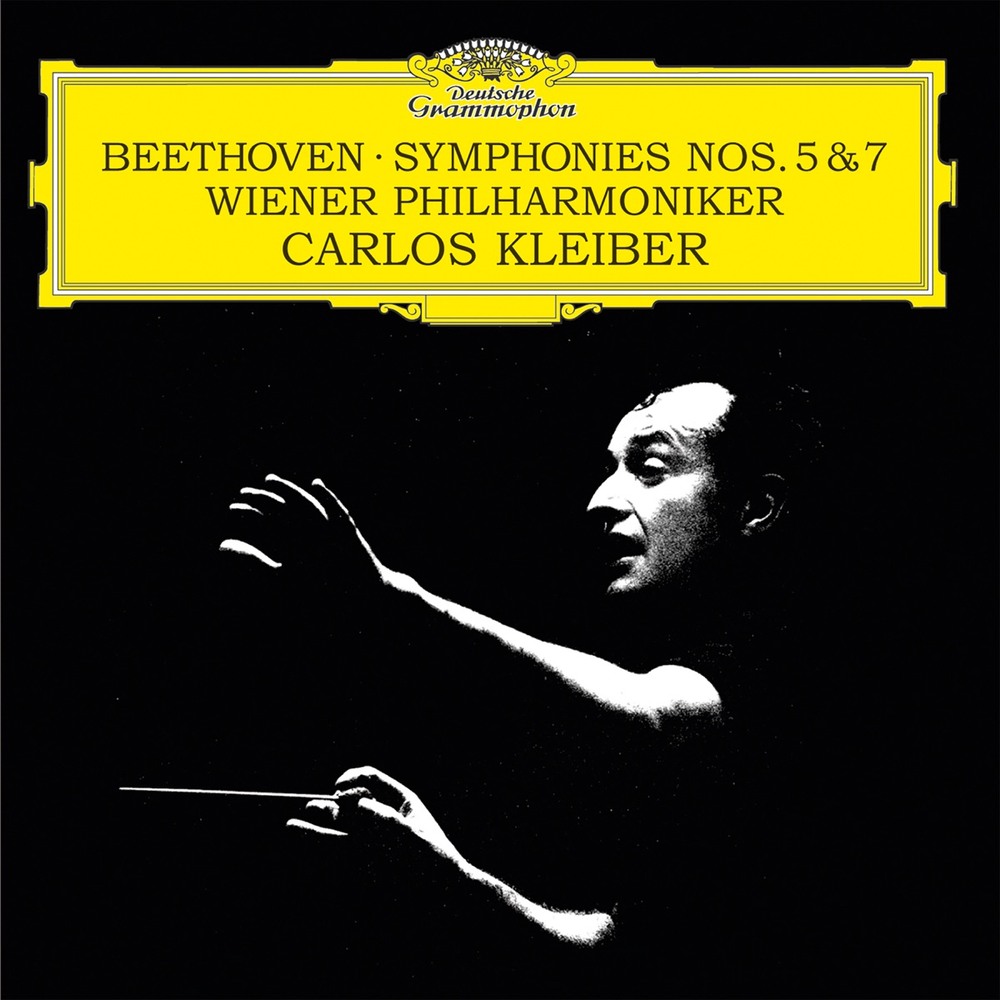
Beethoven Symphony No. 7, 2nd Movement — Carlos Kleiber & Vienna Philharmonic
Use the short articulation of the low strings in the first repetition, and the spring that comes as the melody swells, as your reference point. On your first listen to “Beethoven Symphony No. 7, 2nd Movement — Carlos Kleiber & Vienna Philharmonic,” follow the points described here; on the second, widen your focus to the bass and inner voices. That way, the texture of Symphony No. 7: II. Allegretto and the phrase lengths chosen by Vienna Philharmonic & Carlos Kleiber come through together. Rather than waiting for the famous passages, mark the moments where the tone color shifts, and you won't lose sight of where the piece is heading.
The Symphony No. 7: II. Allegretto track linked to “Beethoven Symphony No. 7, 2nd Movement — Carlos Kleiber & Vienna Philharmonic” is an actual recording from the album Beethoven: Symphonies Nos. 5 & 7, introduced as the “Beethoven Symphony No. 7, 2nd Movement — Carlos Kleiber & Vienna Philharmonic” entry to fit the selection criteria of “The Same Score, So Different: Eight Performances of Beethoven's Seventh, Second Movement.” The performers listed on Apple Music for “Beethoven Symphony No. 7, 2nd Movement — Carlos Kleiber & Vienna Philharmonic” are Vienna Philharmonic & Carlos Kleiber, and the release year is 1995; since this date may differ from when Ludwig van Beethoven wrote the work, we use it in this list only as recording information. When looking for other versions of the same work as “Beethoven Symphony No. 7, 2nd Movement — Carlos Kleiber & Vienna Philharmonic,” check the title, performers, and album together so you don't confuse the same recording with a reissue, and so you can also see the context of the list.
The Symphony No. 7: II. Allegretto track linked to “Beethoven Symphony No. 7, 2nd Movement — Carlos Kleiber & Vienna Philharmonic” is an actual recording from the album Beethoven: Symphonies Nos. 5 & 7, introduced as the “Beethoven Symphony No. 7, 2nd Movement — Carlos Kleiber & Vienna Philharmonic” entry to fit the selection criteria of “The Same Score, So Different: Eight Performances of Beethoven's Seventh, Second Movement.” The performers listed on Apple Music for “Beethoven Symphony No. 7, 2nd Movement — Carlos Kleiber & Vienna Philharmonic” are Vienna Philharmonic & Carlos Kleiber, and the release year is 1995; since this date may differ from when Ludwig van Beethoven wrote the work, we use it in this list only as recording information. When looking for other versions of the same work as “Beethoven Symphony No. 7, 2nd Movement — Carlos Kleiber & Vienna Philharmonic,” check the title, performers, and album together so you don't confuse the same recording with a reissue, and so you can also see the context of the list.
연주자 Vienna Philharmonic & Carlos Kleiber
작곡가 Ludwig van Beethoven
작품 Symphony No. 7: II. Allegretto
표시 발매 연도 1995
수록 음반 Beethoven: Symphonies Nos. 5 & 7
형식 음원
감상 포인트 단단한 리듬과 유연한 프레이즈가 함께 움직여 추진력과 어두운 정서를 균형 있게 만든다.
듣기 팁 첫 반복에서 낮은 현의 짧은 발음과 선율이 커질 때 생기는 탄력을 기준점으로 삼아보자.

Beethoven Symphony No. 7, 2nd Movement — Karajan & Vienna Philharmonic
Compare this with Kleiber by focusing on the thick line drawn by the strings as a whole rather than the boundaries between notes. Next, check whether the register and accents change when the same motif returns in “Beethoven Symphony No. 7, 2nd Movement — Karajan & Vienna Philharmonic.” The performance by Vienna Philharmonic & Herbert von Karajan reveals the broad arc of Symphony No. 7: II. Allegretto through the connections between voices rather than by exaggerating it. Finally, go back to the opening of “Beethoven Symphony No. 7, 2nd Movement — Karajan & Vienna Philharmonic” and compare it with your first impression, and the structure comes into sharp focus.
The Symphony No. 7: II. Allegretto track linked to “Beethoven Symphony No. 7, 2nd Movement — Karajan & Vienna Philharmonic” is an actual recording from the album Beethoven: Symphony No. 7 & Haydn: Symphony No. 104, introduced as the “Beethoven Symphony No. 7, 2nd Movement — Karajan & Vienna Philharmonic” entry to fit the selection criteria of “The Same Score, So Different: Eight Performances of Beethoven's Seventh, Second Movement.” The performers listed on Apple Music for “Beethoven Symphony No. 7, 2nd Movement — Karajan & Vienna Philharmonic” are Vienna Philharmonic & Herbert von Karajan, and the release year is 1959; since this date may differ from when Ludwig van Beethoven wrote the work, we use it only as recording information. When looking for other versions of the same work as “Beethoven Symphony No. 7, 2nd Movement — Karajan & Vienna Philharmonic,” check the title, performers, and album together so you don't confuse the same recording with a reissue, and so you can also see the context of this list.
The Symphony No. 7: II. Allegretto track linked to “Beethoven Symphony No. 7, 2nd Movement — Karajan & Vienna Philharmonic” is an actual recording from the album Beethoven: Symphony No. 7 & Haydn: Symphony No. 104, introduced as the “Beethoven Symphony No. 7, 2nd Movement — Karajan & Vienna Philharmonic” entry to fit the selection criteria of “The Same Score, So Different: Eight Performances of Beethoven's Seventh, Second Movement.” The performers listed on Apple Music for “Beethoven Symphony No. 7, 2nd Movement — Karajan & Vienna Philharmonic” are Vienna Philharmonic & Herbert von Karajan, and the release year is 1959; since this date may differ from when Ludwig van Beethoven wrote the work, we use it only as recording information. When looking for other versions of the same work as “Beethoven Symphony No. 7, 2nd Movement — Karajan & Vienna Philharmonic,” check the title, performers, and album together so you don't confuse the same recording with a reissue, and so you can also see the context of this list.
연주자 Vienna Philharmonic & Herbert von Karajan
작곡가 Ludwig van Beethoven
작품 Symphony No. 7: II. Allegretto
표시 발매 연도 1959
수록 음반 Beethoven: Symphony No. 7 & Haydn: Symphony No. 104
형식 음원
감상 포인트 매끈하게 이어지는 현악과 넓은 잔향이 반복 리듬을 하나의 긴 호흡으로 묶는다.
듣기 팁 음과 음 사이의 경계보다 현악 전체가 만드는 두꺼운 선을 중심으로 클라이버와 비교해보자.
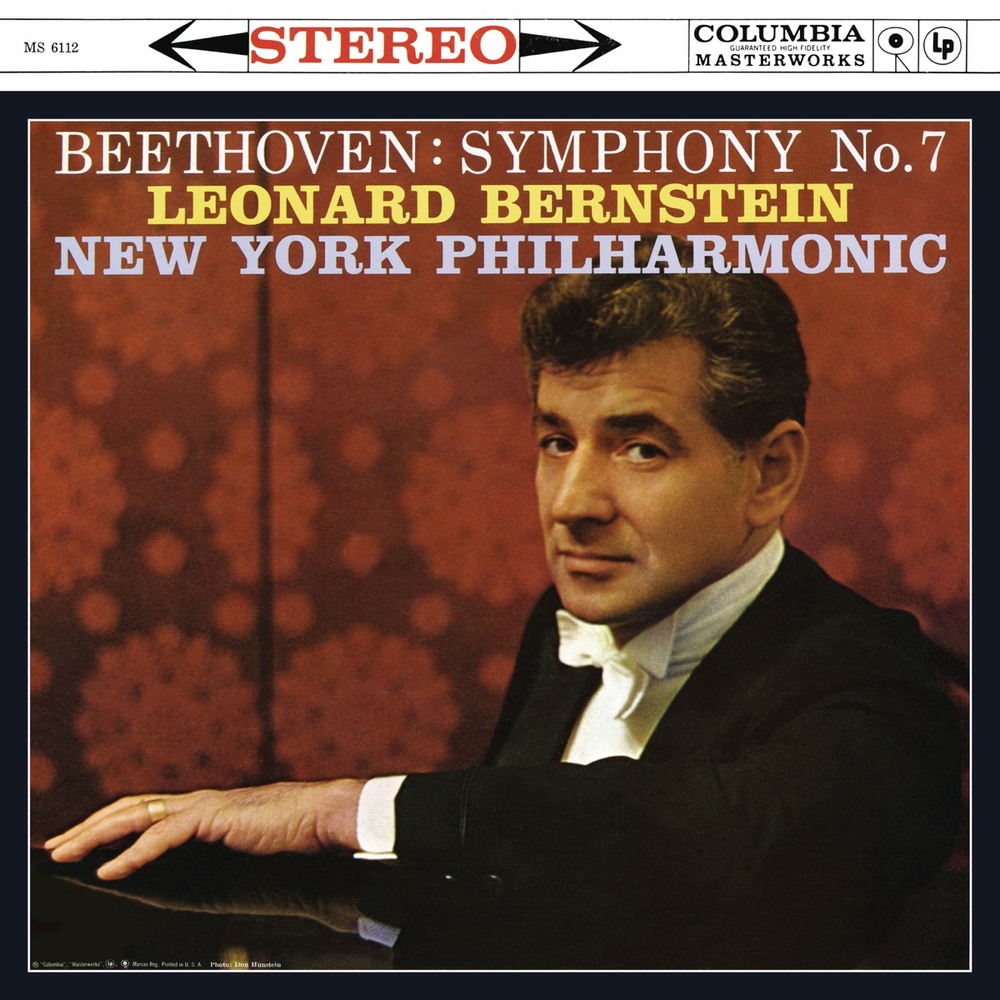
Beethoven Symphony No. 7, 2nd Movement — Bernstein & New York Philharmonic
Listen to how quickly the volume grows as the middle voices join in, and to the slowdown after the climax. When you listen to this recording again, focus less on tempo and more on the order in which sounds pile up and clear away. Track which voices the recurring material of Symphony No. 7: II. Allegretto moves into, and you'll also hear the sense of balance of Leonard Bernstein & New York Philharmonic. Compare the resonance lingering at the end of “Beethoven Symphony No. 7, 2nd Movement — Bernstein & New York Philharmonic” with the opening phrase, and the emotional shift makes sense within the structure.
The Symphony No. 7: II. Allegretto track linked to “Beethoven Symphony No. 7, 2nd Movement — Bernstein & New York Philharmonic” is an actual recording from the album Beethoven: Symphony No. 7 in A Major, Op. 92 (Remastered), introduced as the “Beethoven Symphony No. 7, 2nd Movement — Bernstein & New York Philharmonic” entry to fit the selection criteria of “The Same Score, So Different: Eight Performances of Beethoven's Seventh, Second Movement.” The performers listed on Apple Music for “Beethoven Symphony No. 7, 2nd Movement — Bernstein & New York Philharmonic” are Leonard Bernstein & New York Philharmonic, and the release year is 1960; since this date may differ from when Ludwig van Beethoven wrote the work, we use it here only as recording information. When looking for other versions of the same work as “Beethoven Symphony No. 7, 2nd Movement — Bernstein & New York Philharmonic,” check the title, performers, and album together so you don't confuse the same recording with a reissue, and so you can also see the context of this list.
The Symphony No. 7: II. Allegretto track linked to “Beethoven Symphony No. 7, 2nd Movement — Bernstein & New York Philharmonic” is an actual recording from the album Beethoven: Symphony No. 7 in A Major, Op. 92 (Remastered), introduced as the “Beethoven Symphony No. 7, 2nd Movement — Bernstein & New York Philharmonic” entry to fit the selection criteria of “The Same Score, So Different: Eight Performances of Beethoven's Seventh, Second Movement.” The performers listed on Apple Music for “Beethoven Symphony No. 7, 2nd Movement — Bernstein & New York Philharmonic” are Leonard Bernstein & New York Philharmonic, and the release year is 1960; since this date may differ from when Ludwig van Beethoven wrote the work, we use it here only as recording information. When looking for other versions of the same work as “Beethoven Symphony No. 7, 2nd Movement — Bernstein & New York Philharmonic,” check the title, performers, and album together so you don't confuse the same recording with a reissue, and so you can also see the context of this list.
연주자 Leonard Bernstein & New York Philharmonic
작곡가 Ludwig van Beethoven
작품 Symphony No. 7: II. Allegretto
표시 발매 연도 1960
수록 음반 Beethoven: Symphony No. 7 in A Major, Op. 92 (Remastered)
형식 음원
감상 포인트 프레이즈의 굴곡과 클라이맥스의 감정 폭을 크게 잡아 반복 구조를 극적인 서사로 만든다.
듣기 팁 중간 성부가 합류할 때 음량이 얼마나 빠르게 커지는지와 절정 뒤의 감속을 들어보자.
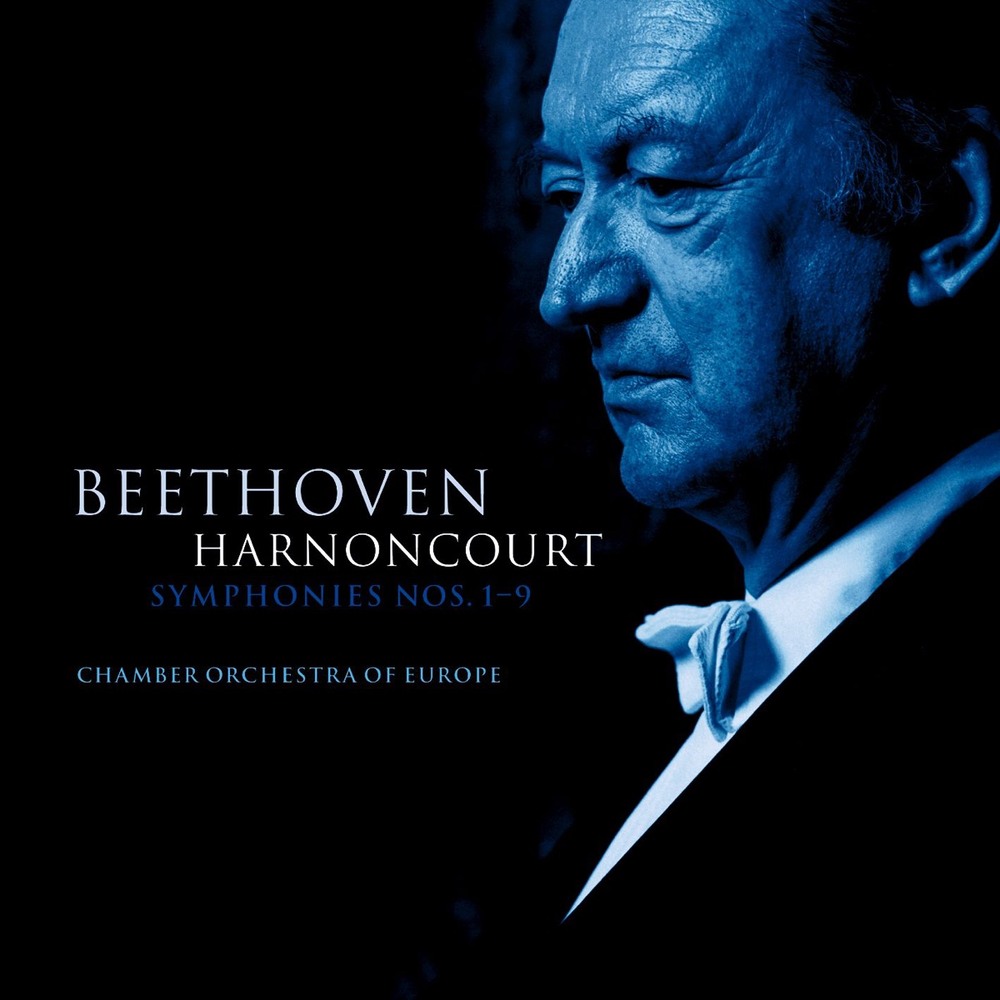
Beethoven Symphony No. 7, 2nd Movement — Harnoncourt & Chamber Orchestra of Europe
Focus on whether the inner voices above the bass rhythm can each be heard clearly instead of blurring together. Next, listen to what the accompaniment and background voices of “Beethoven Symphony No. 7, 2nd Movement — Harnoncourt & Chamber Orchestra of Europe” are doing at the same moment. Follow how earlier material returns in different instruments and registers, and the design of Symphony No. 7: II. Allegretto reveals itself naturally. If you also mark where Nikolaus Harnoncourt & Chamber Orchestra of Europe places the accents, you'll have a yardstick for comparing other performances.
The Symphony No. 7: II. Allegretto track linked to “Beethoven Symphony No. 7, 2nd Movement — Harnoncourt & Chamber Orchestra of Europe” is an actual recording from the album Beethoven: Symphonies Nos. 1-9, introduced as the “Beethoven Symphony No. 7, 2nd Movement — Harnoncourt & Chamber Orchestra of Europe” entry to fit the selection criteria of “The Same Score, So Different: Eight Performances of Beethoven's Seventh, Second Movement.” The performers listed on Apple Music for “Beethoven Symphony No. 7, 2nd Movement — Harnoncourt & Chamber Orchestra of Europe” are Nikolaus Harnoncourt & Chamber Orchestra of Europe, and the release year is 1991; since this date may differ from when Ludwig van Beethoven wrote the work, we use it only as recording information. When looking for other versions of the same work as “Beethoven Symphony No. 7, 2nd Movement — Harnoncourt & Chamber Orchestra of Europe,” check the title, performers, and album together so you don't confuse the same recording with a reissue, and so you can also see the context of this list.
The Symphony No. 7: II. Allegretto track linked to “Beethoven Symphony No. 7, 2nd Movement — Harnoncourt & Chamber Orchestra of Europe” is an actual recording from the album Beethoven: Symphonies Nos. 1-9, introduced as the “Beethoven Symphony No. 7, 2nd Movement — Harnoncourt & Chamber Orchestra of Europe” entry to fit the selection criteria of “The Same Score, So Different: Eight Performances of Beethoven's Seventh, Second Movement.” The performers listed on Apple Music for “Beethoven Symphony No. 7, 2nd Movement — Harnoncourt & Chamber Orchestra of Europe” are Nikolaus Harnoncourt & Chamber Orchestra of Europe, and the release year is 1991; since this date may differ from when Ludwig van Beethoven wrote the work, we use it only as recording information. When looking for other versions of the same work as “Beethoven Symphony No. 7, 2nd Movement — Harnoncourt & Chamber Orchestra of Europe,” check the title, performers, and album together so you don't confuse the same recording with a reissue, and so you can also see the context of this list.
연주자 Nikolaus Harnoncourt & Chamber Orchestra of Europe
작곡가 Ludwig van Beethoven
작품 Symphony No. 7: II. Allegretto
표시 발매 연도 1991
수록 음반 Beethoven: Symphonies Nos. 1-9
형식 음원
감상 포인트 짧고 분명한 발음과 투명한 성부 분리가 익숙한 낭만적 해석에서 리듬의 뼈대를 꺼내 보인다.
듣기 팁 저음 리듬 위의 안쪽 성부가 뭉치지 않고 각각 들리는지 집중해보자.
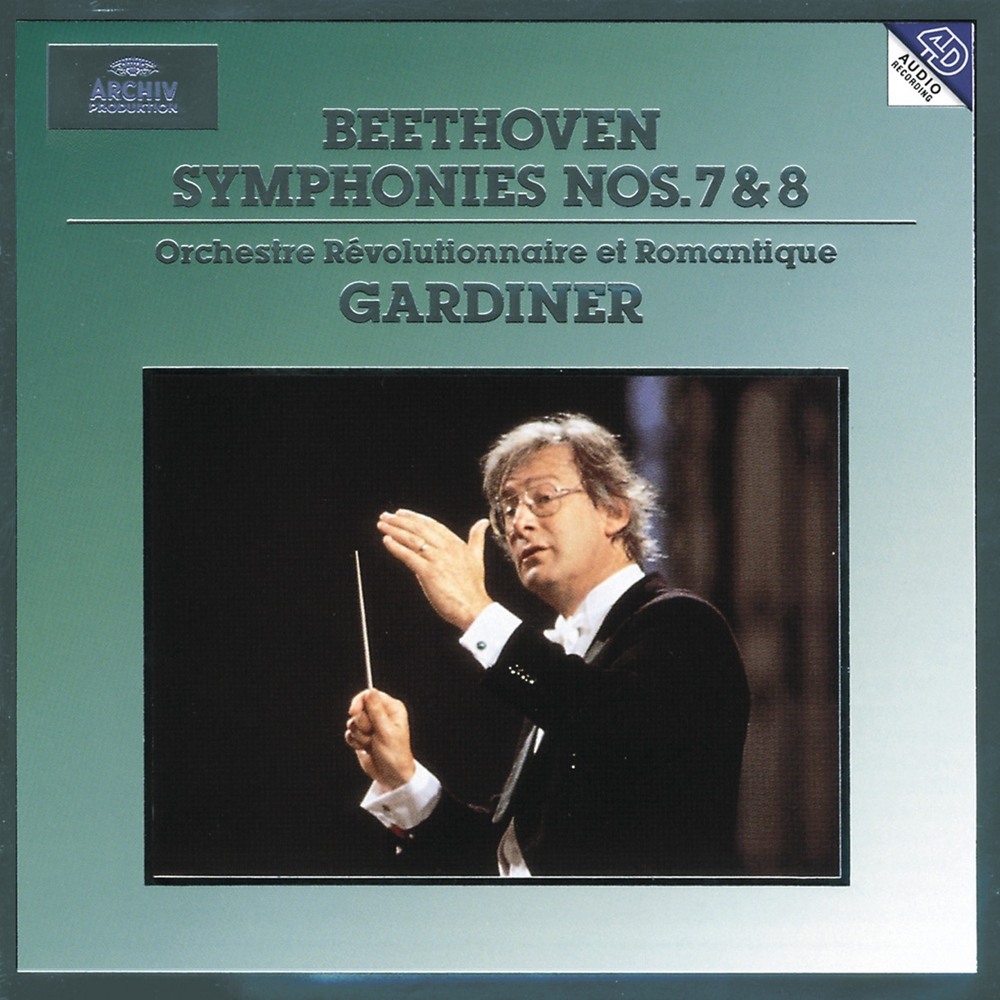
Beethoven Symphony No. 7, 2nd Movement — Gardiner & Orchestre Révolutionnaire et Romantique
Listen to how much more directly the string attacks and woodwind colors stand apart than in a modern-orchestra performance. When you listen to “Beethoven Symphony No. 7, 2nd Movement — Gardiner & Orchestre Révolutionnaire et Romantique” once more, look for the lowest note and the longest note. Where the two meet determines the tension and release of Symphony No. 7: II. Allegretto, and it's also where the interpretation of Orchestre Révolutionnaire et Romantique & John Eliot Gardiner comes through most clearly. Compare the length of the breaths and the resonance in “Beethoven Symphony No. 7, 2nd Movement — Gardiner & Orchestre Révolutionnaire et Romantique” rather than the volume, and the reason this version was chosen becomes vivid.
The Symphony No. 7: II. Allegretto track linked to “Beethoven Symphony No. 7, 2nd Movement — Gardiner & Orchestre Révolutionnaire et Romantique” is an actual recording from the album Beethoven: Symphony No. 7, Op. 92 & No. 8, Op. 93, introduced as the “Beethoven Symphony No. 7, 2nd Movement — Gardiner & Orchestre Révolutionnaire et Romantique” entry to fit the selection criteria of “The Same Score, So Different: Eight Performances of Beethoven's Seventh, Second Movement.” The performers listed on Apple Music for “Beethoven Symphony No. 7, 2nd Movement — Gardiner & Orchestre Révolutionnaire et Romantique” are Orchestre Révolutionnaire et Romantique & John Eliot Gardiner, and the release year is 1994; since this date may differ from when Ludwig van Beethoven wrote the work, we use it only as recording information. When looking for other versions of the same work as “Beethoven Symphony No. 7, 2nd Movement — Gardiner & Orchestre Révolutionnaire et Romantique,” check the title, performers, and album together so you don't confuse the same recording with a reissue, and so you can also see the context of this list.
The Symphony No. 7: II. Allegretto track linked to “Beethoven Symphony No. 7, 2nd Movement — Gardiner & Orchestre Révolutionnaire et Romantique” is an actual recording from the album Beethoven: Symphony No. 7, Op. 92 & No. 8, Op. 93, introduced as the “Beethoven Symphony No. 7, 2nd Movement — Gardiner & Orchestre Révolutionnaire et Romantique” entry to fit the selection criteria of “The Same Score, So Different: Eight Performances of Beethoven's Seventh, Second Movement.” The performers listed on Apple Music for “Beethoven Symphony No. 7, 2nd Movement — Gardiner & Orchestre Révolutionnaire et Romantique” are Orchestre Révolutionnaire et Romantique & John Eliot Gardiner, and the release year is 1994; since this date may differ from when Ludwig van Beethoven wrote the work, we use it only as recording information. When looking for other versions of the same work as “Beethoven Symphony No. 7, 2nd Movement — Gardiner & Orchestre Révolutionnaire et Romantique,” check the title, performers, and album together so you don't confuse the same recording with a reissue, and so you can also see the context of this list.
연주자 Orchestre Révolutionnaire et Romantique & John Eliot Gardiner
작곡가 Ludwig van Beethoven
작품 Symphony No. 7: II. Allegretto
표시 발매 연도 1994
수록 음반 Beethoven: Symphony No. 7, Op. 92 & No. 8, Op. 93
형식 음원
감상 포인트 시대악기의 거친 질감과 빠른 반응이 악센트를 선명하게 세워 행진보다 춤에 가까운 긴장을 만든다.
듣기 팁 현의 어택과 목관의 색이 현대 오케스트라 연주보다 얼마나 직접적으로 분리되는지 들어보자.
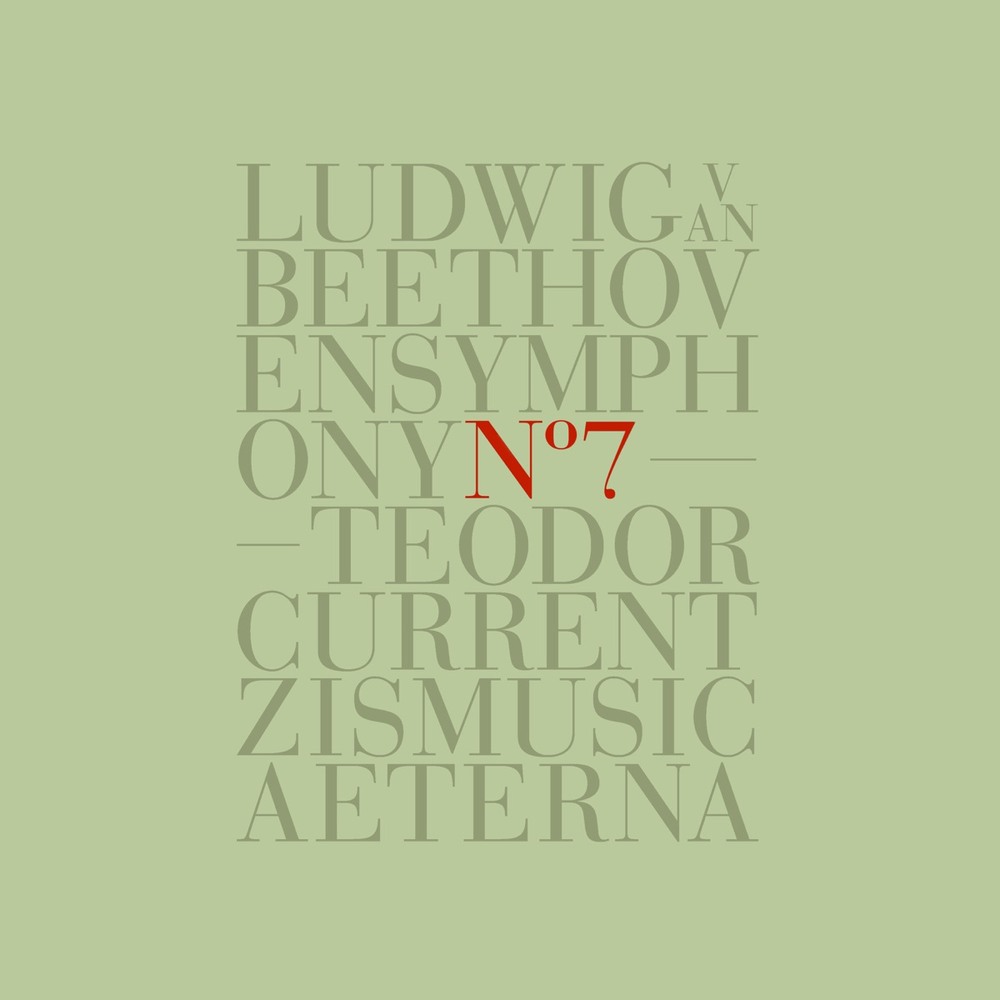
Beethoven Symphony No. 7, 2nd Movement — Currentzis & musicAeterna
Check the span from the very softest sounds to the climax, and whether the accents in each repetition are the same. After that, see whether the instrument that begins the theme in “Beethoven Symphony No. 7, 2nd Movement — Currentzis & MusicAeterna” is the same one that ends it. Symphony No. 7: II. Allegretto moves forward by repeating small gestures while changing the density of the background. Listen for where Teodor Currentzis & MusicAeterna emphasizes those changes, and you can describe the character of this version, going beyond simply enjoying the mood.
The Symphony No. 7: II. Allegretto track linked to “Beethoven Symphony No. 7, 2nd Movement — Currentzis & MusicAeterna” is an actual recording from the album Beethoven: Symphony No. 7 in A Major, Op. 92, introduced as the “Beethoven Symphony No. 7, 2nd Movement — Currentzis & MusicAeterna” entry to fit the selection criteria of “The Same Score, So Different: Eight Performances of Beethoven's Seventh, Second Movement.” The performers listed on Apple Music for “Beethoven Symphony No. 7, 2nd Movement — Currentzis & MusicAeterna” are Teodor Currentzis & MusicAeterna, and the release year is 2021; since this date may differ from when Ludwig van Beethoven wrote the work, we use it only as recording information. When looking for other versions of the same work as “Beethoven Symphony No. 7, 2nd Movement — Currentzis & MusicAeterna,” check the title, performers, and album together so you don't confuse the same recording with a reissue, and so you can also see the context of the list.
The Symphony No. 7: II. Allegretto track linked to “Beethoven Symphony No. 7, 2nd Movement — Currentzis & MusicAeterna” is an actual recording from the album Beethoven: Symphony No. 7 in A Major, Op. 92, introduced as the “Beethoven Symphony No. 7, 2nd Movement — Currentzis & MusicAeterna” entry to fit the selection criteria of “The Same Score, So Different: Eight Performances of Beethoven's Seventh, Second Movement.” The performers listed on Apple Music for “Beethoven Symphony No. 7, 2nd Movement — Currentzis & MusicAeterna” are Teodor Currentzis & MusicAeterna, and the release year is 2021; since this date may differ from when Ludwig van Beethoven wrote the work, we use it only as recording information. When looking for other versions of the same work as “Beethoven Symphony No. 7, 2nd Movement — Currentzis & MusicAeterna,” check the title, performers, and album together so you don't confuse the same recording with a reissue, and so you can also see the context of the list.
연주자 Teodor Currentzis & MusicAeterna
작곡가 Ludwig van Beethoven
작품 Symphony No. 7: II. Allegretto
표시 발매 연도 2021
수록 음반 Beethoven: Symphony No. 7 in A Major, Op. 92
형식 음원
감상 포인트 강한 대비와 세밀한 음량 조절로 반복되는 패턴마다 긴장과 정지를 과감하게 부각한다.
듣기 팁 아주 작은 소리에서 절정으로 이동하는 폭과 각 반복의 악센트가 동일한지 확인해보자.
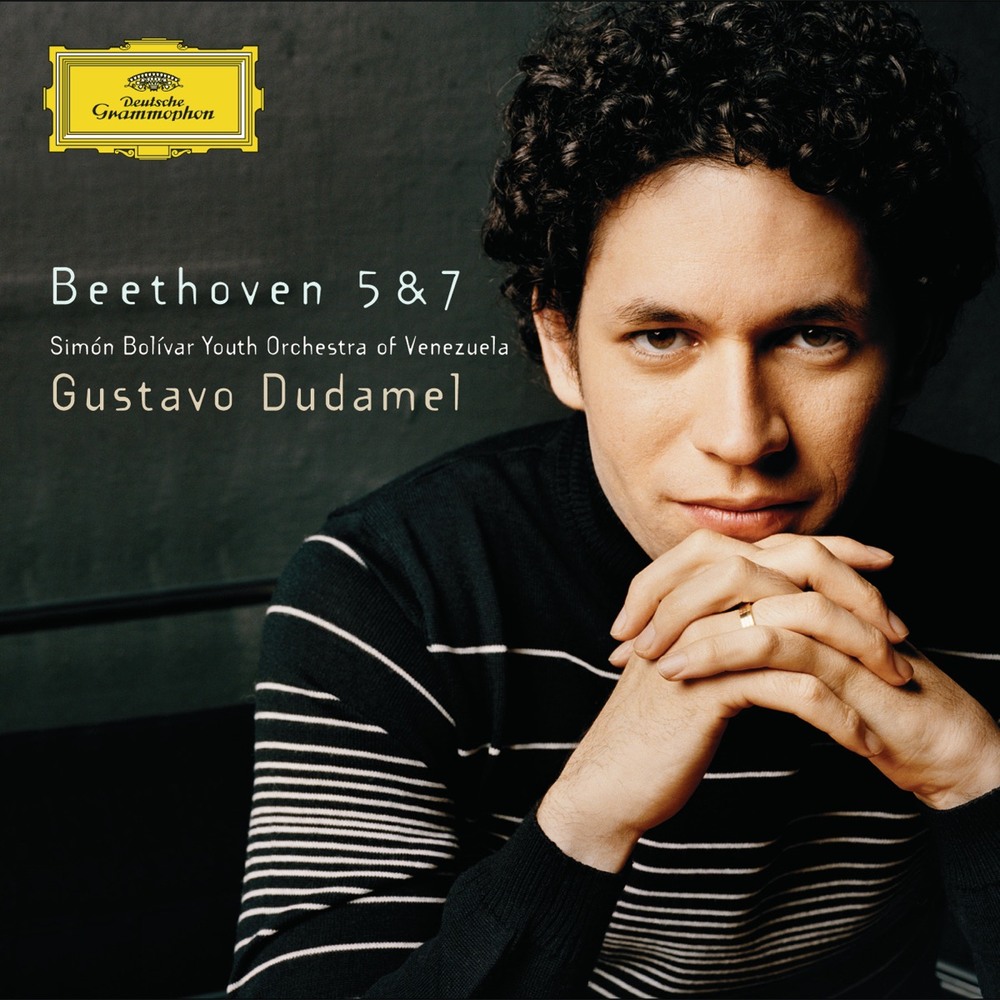
Beethoven Symphony No. 7, 2nd Movement — Dudamel & Simón Bolívar Youth Orchestra
Listen to how the warmth of the ensemble brightens as a pattern that starts in the bass spreads to the upper voices. When the same passage repeats in “Beethoven Symphony No. 7, 2nd Movement — Dudamel & Simón Bolívar Youth Orchestra,” pick either tempo or dynamics and compare. Narrowing your listening to the choices of Simón Bolívar Youth Orchestra of Venezuela & Gustavo Dudamel by a single criterion keeps you from missing the inner voices and rhythms of Symphony No. 7: II. Allegretto. Finally, listen to the whole of “Beethoven Symphony No. 7, 2nd Movement — Dudamel & Simón Bolívar Youth Orchestra” again and notice how the details shaped your impression of the work.
The Symphony No. 7: II. Allegretto track linked to “Beethoven Symphony No. 7, 2nd Movement — Dudamel & Simón Bolívar Youth Orchestra” is an actual recording from the album Beethoven: Symphonies Nos. 5 & 7, introduced as the “Beethoven Symphony No. 7, 2nd Movement — Dudamel & Simón Bolívar Youth Orchestra” entry to fit the selection criteria of “The Same Score, So Different: Eight Performances of Beethoven's Seventh, Second Movement.” The performers listed on Apple Music for “Beethoven Symphony No. 7, 2nd Movement — Dudamel & Simón Bolívar Youth Orchestra” are Simón Bolívar Youth Orchestra of Venezuela & Gustavo Dudamel, and the release year is 2006; since this date may differ from when Ludwig van Beethoven wrote the work, we use it here only as recording information. When looking for other versions of the same work as “Beethoven Symphony No. 7, 2nd Movement — Dudamel & Simón Bolívar Youth Orchestra,” check the title, performers, and album together so you don't confuse the same recording with a reissue, and so you can also see the context of the list.
The Symphony No. 7: II. Allegretto track linked to “Beethoven Symphony No. 7, 2nd Movement — Dudamel & Simón Bolívar Youth Orchestra” is an actual recording from the album Beethoven: Symphonies Nos. 5 & 7, introduced as the “Beethoven Symphony No. 7, 2nd Movement — Dudamel & Simón Bolívar Youth Orchestra” entry to fit the selection criteria of “The Same Score, So Different: Eight Performances of Beethoven's Seventh, Second Movement.” The performers listed on Apple Music for “Beethoven Symphony No. 7, 2nd Movement — Dudamel & Simón Bolívar Youth Orchestra” are Simón Bolívar Youth Orchestra of Venezuela & Gustavo Dudamel, and the release year is 2006; since this date may differ from when Ludwig van Beethoven wrote the work, we use it here only as recording information. When looking for other versions of the same work as “Beethoven Symphony No. 7, 2nd Movement — Dudamel & Simón Bolívar Youth Orchestra,” check the title, performers, and album together so you don't confuse the same recording with a reissue, and so you can also see the context of the list.
연주자 Simón Bolívar Youth Orchestra of Venezuela & Gustavo Dudamel
작곡가 Ludwig van Beethoven
작품 Symphony No. 7: II. Allegretto
표시 발매 연도 2006
수록 음반 Beethoven: Symphonies Nos. 5 & 7
형식 음원
감상 포인트 젊은 오케스트라의 따뜻한 현악과 선명한 상승선이 반복 리듬에 넓은 에너지를 더한다.
듣기 팁 저음에서 시작한 패턴이 높은 성부로 번질 때 합주의 온도가 어떻게 밝아지는지 들어보자.
Beethoven Symphony No. 7, 2nd Movement — Petrenko & Berlin Philharmonic
In the later section where the melodies overlap, listen for whether any voice gets buried, and how quickly things settle after the climax. On your first listen to “Beethoven Symphony No. 7, 2nd Movement — Petrenko & Berlin Philharmonic,” find the one sound pointed out here; on the next, add the surrounding voices and the silences. You can hear how Kirill Petrenko & Berlin Philharmonic adjusts tempo and tone color as Symphony No. 7: II. Allegretto builds toward its climax. Compare the opening and closing sonorities of “Beethoven Symphony No. 7, 2nd Movement — Petrenko & Berlin Philharmonic” side by side, and the sense of distance and time the piece creates stays with you in concrete terms.
The Symphony No. 7: II. Allegretto track linked to “Beethoven Symphony No. 7, 2nd Movement — Petrenko & Berlin Philharmonic” is an actual recording from the album Beethoven: Symphony No. 7, introduced as the “Beethoven Symphony No. 7, 2nd Movement — Petrenko & Berlin Philharmonic” entry to fit the selection criteria of “The Same Score, So Different: Eight Performances of Beethoven's Seventh, Second Movement.” The performers listed on Apple Music for “Beethoven Symphony No. 7, 2nd Movement — Petrenko & Berlin Philharmonic” are Kirill Petrenko & Berlin Philharmonic, and the release year is 2020; since this date may differ from when Ludwig van Beethoven wrote the work, we use it here only as recording information. When looking for other versions of the same work as “Beethoven Symphony No. 7, 2nd Movement — Petrenko & Berlin Philharmonic,” check the title, performers, and album together so you don't confuse the same recording with a reissue, and so you can also see the context of the list.
The Symphony No. 7: II. Allegretto track linked to “Beethoven Symphony No. 7, 2nd Movement — Petrenko & Berlin Philharmonic” is an actual recording from the album Beethoven: Symphony No. 7, introduced as the “Beethoven Symphony No. 7, 2nd Movement — Petrenko & Berlin Philharmonic” entry to fit the selection criteria of “The Same Score, So Different: Eight Performances of Beethoven's Seventh, Second Movement.” The performers listed on Apple Music for “Beethoven Symphony No. 7, 2nd Movement — Petrenko & Berlin Philharmonic” are Kirill Petrenko & Berlin Philharmonic, and the release year is 2020; since this date may differ from when Ludwig van Beethoven wrote the work, we use it here only as recording information. When looking for other versions of the same work as “Beethoven Symphony No. 7, 2nd Movement — Petrenko & Berlin Philharmonic,” check the title, performers, and album together so you don't confuse the same recording with a reissue, and so you can also see the context of the list.
연주자 Kirill Petrenko & Berlin Philharmonic
작곡가 Ludwig van Beethoven
작품 Symphony No. 7: II. Allegretto
표시 발매 연도 2020
수록 음반 Beethoven: Symphony No. 7
형식 음원
감상 포인트 정교한 성부 균형과 절제된 속도 변화가 리듬의 명료함을 유지하면서 현대적인 긴장감을 만든다.
듣기 팁 선율이 겹치는 후반부에서 어느 성부도 가려지지 않는지, 클라이맥스 뒤 정리가 얼마나 빠른지 들어보자.
There's no need to listen to all eight performances in full at once. Start by comparing the first 90 seconds continuously, marking the first chord, the rhythm of the low strings, and the moment when the second part comes in. Then, listen to the two versions that resonate the most with you through to the end. You'll see that the differences arise not from mere tempo but from the direction of phrases and the weight of the orchestration. A fast performance isn’t always light, and a slow performance isn’t always solemn.
The connected release years are taken from the respective audio editions shown on Apple Music. For historical recordings, take care not to confuse the remastering year with the actual recording date. Once you’re comfortable comparing, try broadening your scope to the first or fourth movements to see how the same conductor designs the entire rhythm-centered symphony. The purpose of this list is to distinguish interpretations you'd like to revisit based on circumstances rather than simply picking the best performance.
The connected release years are taken from the respective audio editions shown on Apple Music. For historical recordings, take care not to confuse the remastering year with the actual recording date. Once you’re comfortable comparing, try broadening your scope to the first or fourth movements to see how the same conductor designs the entire rhythm-centered symphony. The purpose of this list is to distinguish interpretations you'd like to revisit based on circumstances rather than simply picking the best performance.
At a glance
8 items
Beethoven Symphony No. 7, 2nd Movement — Carlos Kleiber & Vienna Philharmonic
1995음원
Beethoven Symphony No. 7, 2nd Movement — Karajan & Vienna Philharmonic
1959음원
Beethoven Symphony No. 7, 2nd Movement — Bernstein & New York Philharmonic
1960음원
Beethoven Symphony No. 7, 2nd Movement — Harnoncourt & Chamber Orchestra of Europe
1991음원
Beethoven Symphony No. 7, 2nd Movement — Gardiner & Orchestre Révolutionnaire et Romantique
1994음원
Beethoven Symphony No. 7, 2nd Movement — Currentzis & musicAeterna
2021음원
Beethoven Symphony No. 7, 2nd Movement — Dudamel & Simón Bolívar Youth Orchestra
2006음원
Beethoven Symphony No. 7, 2nd Movement — Petrenko & Berlin Philharmonic
2020음원
As part of the Coupang Partners program, this post may earn a commission from qualifying purchases.
Comments 0
Log in to leave a comment.
Be the first to comment.
How about these lists?


You might also like


🎲
Not ready to stop here?
Wondering what to read next is the biggest waste of time.
Let the dice decide — you won't know what pops up until you roll.
If you don't press it… won't you wonder forever? 👀