Collection
Science
2026.09.11
Multirole Fighter Changing Missions with a Single Airframe
The operational philosophy of a real platform switching between air-to-air, precision strikes, and reconnaissance
A multirole fighter is not just an aircraft with many mission names, but a platform that can actually switch missions when sensors, armaments, pilot training, and ground support systems change. The capability to prepare for both air-to-air and strike missions in a single sortie is also an important criterion.
This list includes ten aircraft like the F-16V, F-35A, Rafale, Gripen E, and FA-50, varying in size, price, and operational philosophy. It is not a ranking of the best aircraft, but rather an examination of how cockpit configuration, network capabilities, range, and maintenance methods contribute to mission flexibility. Understanding a multirole fighter changing missions requires looking beyond the specifications and considering the operational status and mission framework.
This list includes ten aircraft like the F-16V, F-35A, Rafale, Gripen E, and FA-50, varying in size, price, and operational philosophy. It is not a ranking of the best aircraft, but rather an examination of how cockpit configuration, network capabilities, range, and maintenance methods contribute to mission flexibility. Understanding a multirole fighter changing missions requires looking beyond the specifications and considering the operational status and mission framework.
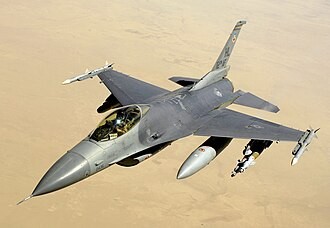
F-16V Viper
The 'F-16V Viper' is a single-engine multirole fighter developed and produced by Lockheed Martin in the United States. The first flight year was 2015, and its current status is 'in production and modification.' The most notable feature is the integration of an AESA radar and a modern mission computer into the existing F-16 structure. When evaluating the F-16V Viper as a multirole fighter, one should not rely solely on the paint scheme of similar variants but should verify the model name, operator, and mission for an accurate assessment.
By examining the placement of the wings and intake, the implementation of mission conversion and integration of armaments and sensors in the 'F-16V Viper' becomes clearer. The first flight in 2015 marks the beginning of technical development, not immediate deployment to service. The current status of the F-16V Viper is 'in production and modification,' and it is separately noted to avoid confusion with prototype, retired, and production models still in service. The detailed specifications of the F-16V Viper also change according to armament and fuel configuration, so the primary mission takes precedence over a single number.
When comparing the 'F-16V Viper' with the next entries, examine the number of engines, crew, radar and electronic warfare equipment, and the arrangement of armaments in that order. Do not determine superiority by top speed alone; consider the entire mission. The 'multirole fighter changing missions' is not a ranking to glorify the destructive power of the F-16V Viper or decide a winner in a hypothetical engagement. The essential information needed to understand the aviation technology and operational profile of the F-16V Viper comes first from the connected manufacturer, military, and museum sources. Images of the F-16V Viper utilize aircraft photos verifiable through Wikimedia Commons via Wikipedia.
By examining the placement of the wings and intake, the implementation of mission conversion and integration of armaments and sensors in the 'F-16V Viper' becomes clearer. The first flight in 2015 marks the beginning of technical development, not immediate deployment to service. The current status of the F-16V Viper is 'in production and modification,' and it is separately noted to avoid confusion with prototype, retired, and production models still in service. The detailed specifications of the F-16V Viper also change according to armament and fuel configuration, so the primary mission takes precedence over a single number.
When comparing the 'F-16V Viper' with the next entries, examine the number of engines, crew, radar and electronic warfare equipment, and the arrangement of armaments in that order. Do not determine superiority by top speed alone; consider the entire mission. The 'multirole fighter changing missions' is not a ranking to glorify the destructive power of the F-16V Viper or decide a winner in a hypothetical engagement. The essential information needed to understand the aviation technology and operational profile of the F-16V Viper comes first from the connected manufacturer, military, and museum sources. Images of the F-16V Viper utilize aircraft photos verifiable through Wikimedia Commons via Wikipedia.
제작사 록히드 마틴
국가 미국
첫 비행 2015년
주요 역할 단발 다목적 전투기
상태 생산·개량 중
이미지 출처 Wikipedia/Wikimedia Commons · General Dynamics F-16 Fighting Falcon
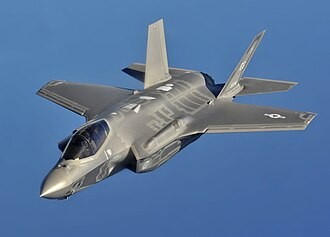
F-35A Lightning II
The 'F-35A Lightning II' is a stealth multirole fighter developed and produced by Lockheed Martin, part of a US and international joint development program. The first flight year was 2006, and its current status is 'in service.' The key operational aspect is the internal sensor fusion that provides air-to-air and precision strike information on a single display. When evaluating the F-35A Lightning II as a multirole fighter, one should not rely solely on the paint scheme of similar variants but should verify the model name, operator, and mission for an accurate assessment.
Reading the official descriptions of the missions clarifies how the 'F-35A Lightning II' implements mission conversion and integration of armaments and sensors. The first flight in 2006 marks the beginning of technical development, not immediate deployment to service. The current status of the F-35A Lightning II is 'in service,' and it is noted separately to avoid confusion with prototype, retired, and production models. The detailed specifications of the F-35A Lightning II also vary according to armament and fuel configuration, so the primary mission takes precedence over a single number.
When comparing the 'F-35A Lightning II' with the next entries, examine the number of engines, crew, radar and electronic warfare equipment, and the arrangement of armaments in that order. It is important not to call prototypes and operational models by the same status. The 'multirole fighter changing missions' is not a ranking to glorify the destructive power of the F-35A Lightning II or determine a winner in a hypothetical engagement. The essential information necessary to understand the aviation technology and operational profile of the F-35A Lightning II comes first from the connected manufacturer, military, and museum sources. Images of the F-35A Lightning II utilize aircraft photos verifiable through Wikimedia Commons via Wikipedia.
Reading the official descriptions of the missions clarifies how the 'F-35A Lightning II' implements mission conversion and integration of armaments and sensors. The first flight in 2006 marks the beginning of technical development, not immediate deployment to service. The current status of the F-35A Lightning II is 'in service,' and it is noted separately to avoid confusion with prototype, retired, and production models. The detailed specifications of the F-35A Lightning II also vary according to armament and fuel configuration, so the primary mission takes precedence over a single number.
When comparing the 'F-35A Lightning II' with the next entries, examine the number of engines, crew, radar and electronic warfare equipment, and the arrangement of armaments in that order. It is important not to call prototypes and operational models by the same status. The 'multirole fighter changing missions' is not a ranking to glorify the destructive power of the F-35A Lightning II or determine a winner in a hypothetical engagement. The essential information necessary to understand the aviation technology and operational profile of the F-35A Lightning II comes first from the connected manufacturer, military, and museum sources. Images of the F-35A Lightning II utilize aircraft photos verifiable through Wikimedia Commons via Wikipedia.
제작사 록히드 마틴
국가 미국·국제 공동개발
첫 비행 2006년
주요 역할 스텔스 다목적 전투기
상태 현역
이미지 출처 Wikipedia/Wikimedia Commons · Lockheed Martin F-35 Lightning II
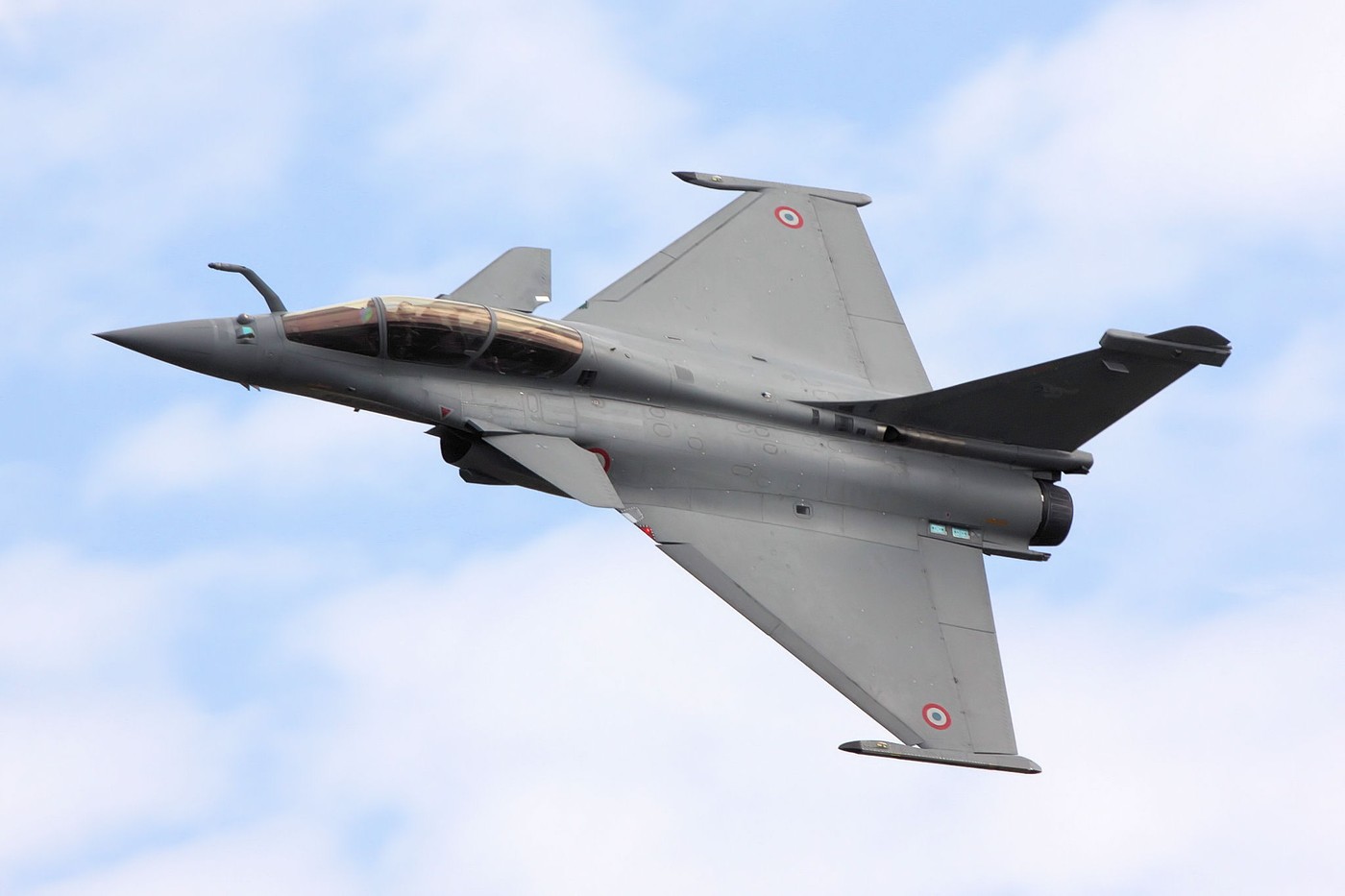
Dassault Rafale C/B
The 'Dassault Rafale C/B' is an omnidirectional fighter developed and produced by Dassault Aviation in France. The first flight year was 1991, and its current status is 'in service.' A distinguishing starting point for this aircraft is its ability to perform air defense, strike, reconnaissance, and nuclear deterrence missions all under a single lineage. When viewing the Dassault Rafale C/B as a multirole fighter, one should not rely solely on the paint scheme of similar variants but should verify the model name, operator, and mission for an accurate assessment.
Placing the first flight year and current status together clarifies how the 'Dassault Rafale C/B' implements mission conversion and integration of armaments and sensors. The first flight in 1991 marks the beginning of technical development, not immediate deployment to service. The current status of the Dassault Rafale C/B is 'in service,' and it is noted separately to avoid confusion with prototype, retired, and production models. The detailed specifications of the Dassault Rafale C/B also vary according to armament and fuel configuration, so the primary mission takes precedence over a single number.
When comparing the 'Dassault Rafale C/B' with the next entries, examine the number of engines, crew, radar and electronic warfare equipment, and the arrangement of armaments in that order. Be sure to separately verify the differences between export models and upgraded versions in operating countries. The 'multirole fighter changing missions' is not a ranking to glorify the destructive power of the Dassault Rafale C/B or determine a winner in a hypothetical engagement. The essential information necessary to understand the aviation technology and operational profile of the Dassault Rafale C/B comes first from the connected manufacturer, military, and museum sources. Images of the Dassault Rafale C/B utilize aircraft photos verifiable through Wikimedia Commons via Wikipedia.
Placing the first flight year and current status together clarifies how the 'Dassault Rafale C/B' implements mission conversion and integration of armaments and sensors. The first flight in 1991 marks the beginning of technical development, not immediate deployment to service. The current status of the Dassault Rafale C/B is 'in service,' and it is noted separately to avoid confusion with prototype, retired, and production models. The detailed specifications of the Dassault Rafale C/B also vary according to armament and fuel configuration, so the primary mission takes precedence over a single number.
When comparing the 'Dassault Rafale C/B' with the next entries, examine the number of engines, crew, radar and electronic warfare equipment, and the arrangement of armaments in that order. Be sure to separately verify the differences between export models and upgraded versions in operating countries. The 'multirole fighter changing missions' is not a ranking to glorify the destructive power of the Dassault Rafale C/B or determine a winner in a hypothetical engagement. The essential information necessary to understand the aviation technology and operational profile of the Dassault Rafale C/B comes first from the connected manufacturer, military, and museum sources. Images of the Dassault Rafale C/B utilize aircraft photos verifiable through Wikimedia Commons via Wikipedia.
제작사 다쏘 아비아시옹
국가 프랑스
첫 비행 1991년
주요 역할 옴니롤 전투기
상태 현역
이미지 출처 Wikipedia/Wikimedia Commons · Dassault Rafale
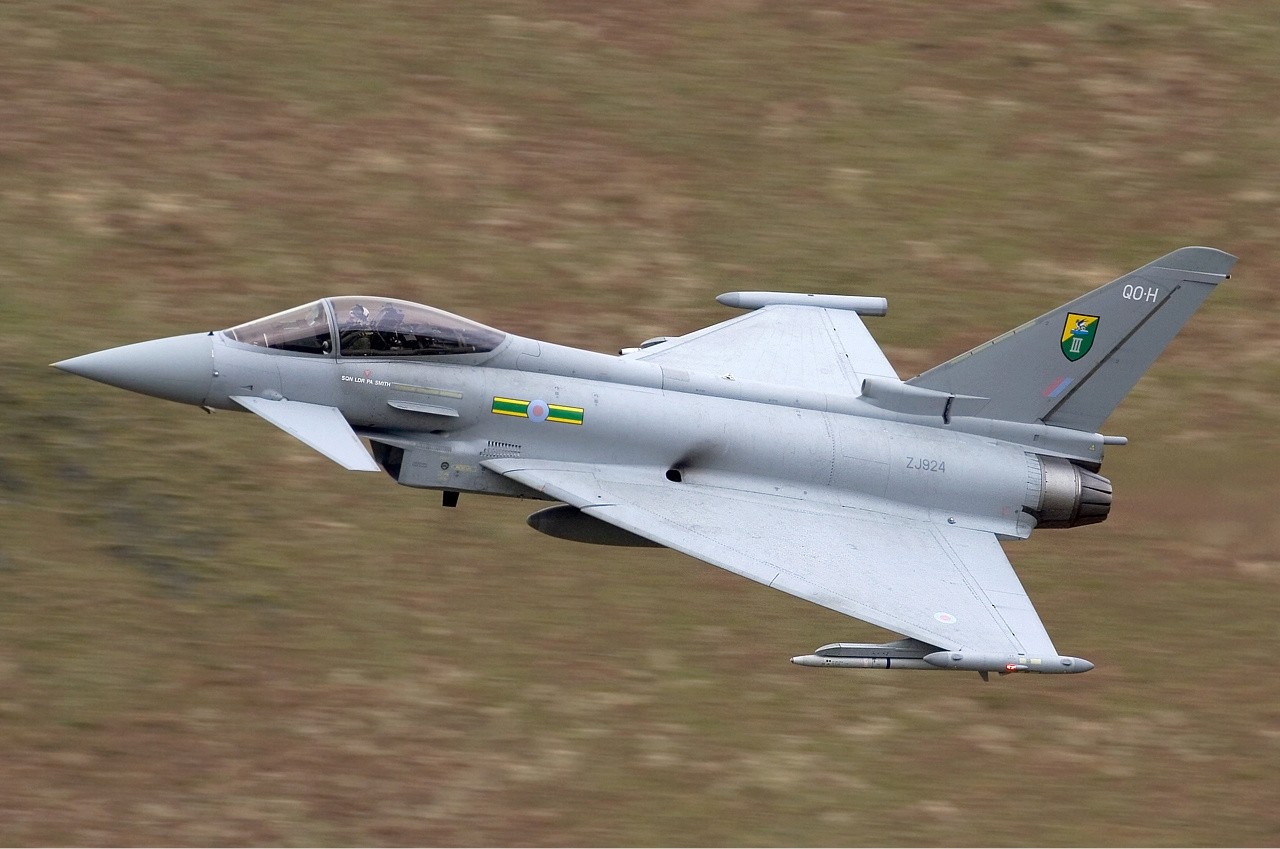
Eurofighter Typhoon
The 'Eurofighter Typhoon' is a multirole fighter developed and produced by the Eurofighter Consortium in four European countries. The first flight year was 1994, and its current status is 'in service.' The noticeable feature when viewing photographs and specifications together is the gradual integration of precision strike capabilities based on air superiority missions. When evaluating the Eurofighter Typhoon as a multirole fighter, one should not rely solely on the paint scheme of similar variants but should verify the model name, operator, and mission for an accurate assessment.
Examining the cockpit capacity and armament arrangement clarifies how the 'Eurofighter Typhoon' implements mission conversion and integration of armaments and sensors. The first flight in 1994 marks the beginning of technical development, not immediate deployment to service. The current status of the Eurofighter Typhoon is 'in service,' and it is noted separately to avoid confusion with prototype, retired, and production models. The detailed specifications of the Eurofighter Typhoon also vary according to armament and fuel configuration, so the primary mission takes precedence over a single number.
When comparing the 'Eurofighter Typhoon' with the next entries, examine the number of engines, crew, radar and electronic warfare equipment, and the arrangement of armaments in that order. Read promotional phrases separately from actual unit deployments. The 'multirole fighter changing missions' is not a ranking to glorify the destructive power of the Eurofighter Typhoon or determine a winner in a hypothetical engagement. The essential information necessary to understand the aviation technology and operational profile of the Eurofighter Typhoon comes first from the connected manufacturer, military, and museum sources. Images of the Eurofighter Typhoon utilize aircraft photos verifiable through Wikimedia Commons via Wikipedia.
Examining the cockpit capacity and armament arrangement clarifies how the 'Eurofighter Typhoon' implements mission conversion and integration of armaments and sensors. The first flight in 1994 marks the beginning of technical development, not immediate deployment to service. The current status of the Eurofighter Typhoon is 'in service,' and it is noted separately to avoid confusion with prototype, retired, and production models. The detailed specifications of the Eurofighter Typhoon also vary according to armament and fuel configuration, so the primary mission takes precedence over a single number.
When comparing the 'Eurofighter Typhoon' with the next entries, examine the number of engines, crew, radar and electronic warfare equipment, and the arrangement of armaments in that order. Read promotional phrases separately from actual unit deployments. The 'multirole fighter changing missions' is not a ranking to glorify the destructive power of the Eurofighter Typhoon or determine a winner in a hypothetical engagement. The essential information necessary to understand the aviation technology and operational profile of the Eurofighter Typhoon comes first from the connected manufacturer, military, and museum sources. Images of the Eurofighter Typhoon utilize aircraft photos verifiable through Wikimedia Commons via Wikipedia.
제작사 유로파이터 컨소시엄
국가 유럽 4개국
첫 비행 1994년
주요 역할 다목적 전투기
상태 현역
이미지 출처 Wikipedia/Wikimedia Commons · Eurofighter Typhoon
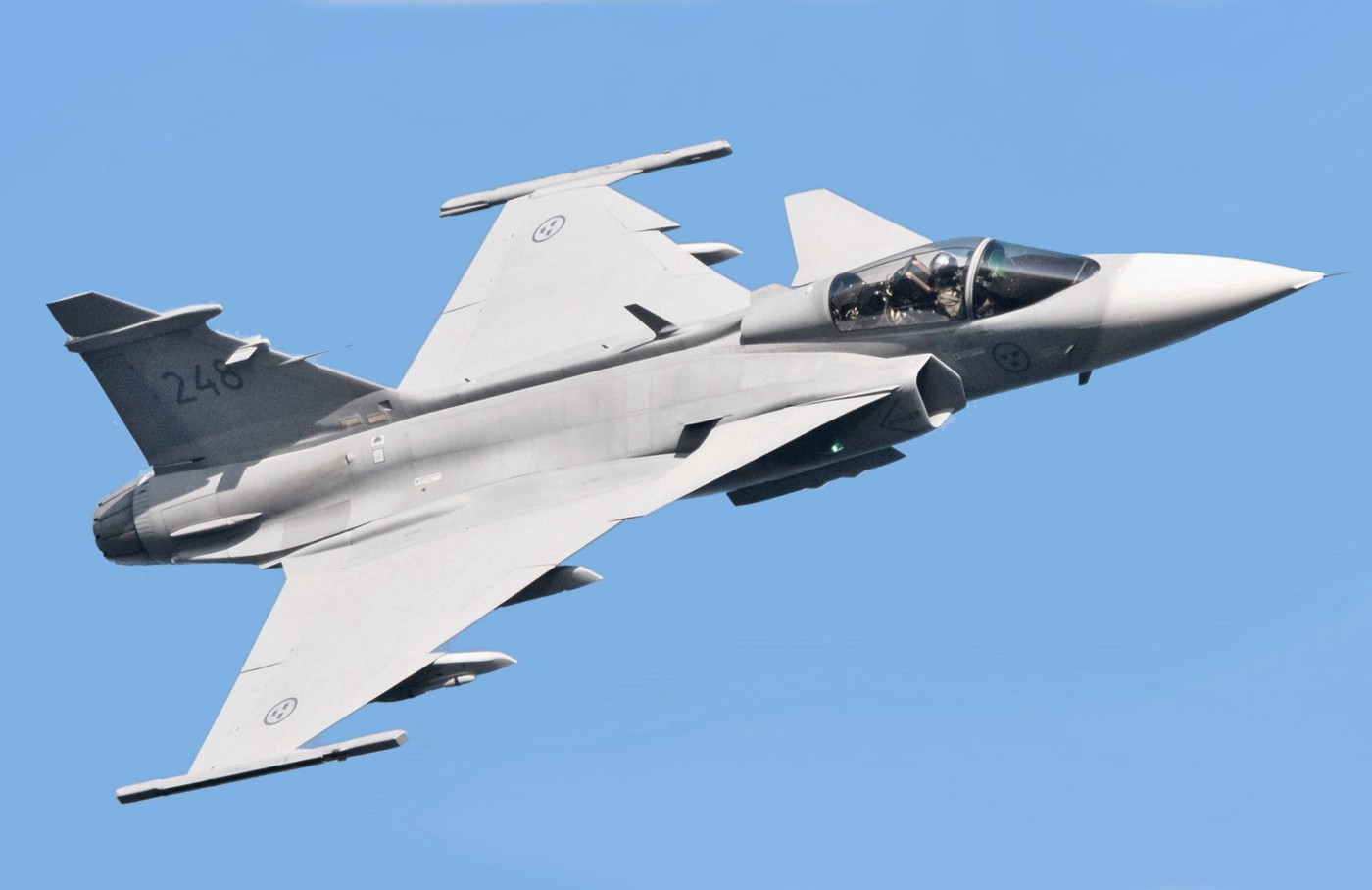
Saab Gripen E
The 'Saab Gripen E' is a lightweight multirole fighter developed and produced by Saab in Sweden. The first flight year was 2017, and its current status is 'incorporating into service.' The points of comparison against aircraft of the same generation include considering network connectivity, electronic warfare, and operation from road bases. When viewing the Saab Gripen E as a multirole fighter, one should not rely solely on the paint scheme of similar variants but should verify the model name, operator, and mission for an accurate assessment.
Comparing land and sea operational conditions clarifies how the 'Saab Gripen E' implements mission conversion and integration of armaments and sensors. The first flight in 2017 marks the beginning of technical development, not immediate deployment to service. The current status of the Saab Gripen E is 'incorporating into service,' and it is noted separately to avoid confusion with prototype, retired, and production models. The detailed specifications of the Saab Gripen E also vary according to armament and fuel configuration, so the primary mission takes precedence over a single number.
When comparing the 'Saab Gripen E' with the next entries, examine the number of engines, crew, radar and electronic warfare equipment, and the arrangement of armaments in that order. The range can vary depending on mission conditions and payload configuration. The 'multirole fighter changing missions' is not a ranking to glorify the destructive power of the Saab Gripen E or determine a winner in a hypothetical engagement. The essential information necessary to understand the aviation technology and operational profile of the Saab Gripen E comes first from the connected manufacturer, military, and museum sources. Images of the Saab Gripen E utilize aircraft photos verifiable through Wikimedia Commons via Wikipedia.
Comparing land and sea operational conditions clarifies how the 'Saab Gripen E' implements mission conversion and integration of armaments and sensors. The first flight in 2017 marks the beginning of technical development, not immediate deployment to service. The current status of the Saab Gripen E is 'incorporating into service,' and it is noted separately to avoid confusion with prototype, retired, and production models. The detailed specifications of the Saab Gripen E also vary according to armament and fuel configuration, so the primary mission takes precedence over a single number.
When comparing the 'Saab Gripen E' with the next entries, examine the number of engines, crew, radar and electronic warfare equipment, and the arrangement of armaments in that order. The range can vary depending on mission conditions and payload configuration. The 'multirole fighter changing missions' is not a ranking to glorify the destructive power of the Saab Gripen E or determine a winner in a hypothetical engagement. The essential information necessary to understand the aviation technology and operational profile of the Saab Gripen E comes first from the connected manufacturer, military, and museum sources. Images of the Saab Gripen E utilize aircraft photos verifiable through Wikimedia Commons via Wikipedia.
제작사 사브
국가 스웨덴
첫 비행 2017년
주요 역할 경량 다목적 전투기
상태 전력화 중
이미지 출처 Wikipedia/Wikimedia Commons · Saab JAS 39 Gripen
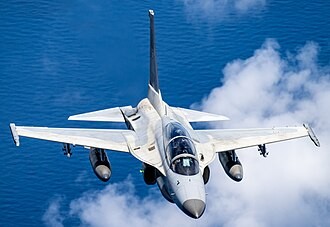
FA-50 Fighting Eagle
The 'FA-50 Fighting Eagle' is a light combat aircraft developed and produced by Korean Aerospace Industries in South Korea. The first flight year was 2011, and its current status is 'in service and operational for export.' The prioritized value by the designers is to expand combat mission capabilities based on a trainer aircraft lineage. When evaluating the FA-50 Fighting Eagle as a multirole fighter, one should not rely solely on the paint scheme of similar variants but should verify the model name, operator, and mission for an accurate assessment.
Exploring the roles of sensors and data links clarifies how the 'FA-50 Fighting Eagle' implements mission conversion and integration of armaments and sensors. The first flight in 2011 marks the beginning of technical development, not immediate deployment to service. The current status of the FA-50 Fighting Eagle is 'in service and operational for export,' and it is noted separately to avoid confusion with prototype, retired, and production models. The detailed specifications of the FA-50 Fighting Eagle also vary according to armament and fuel configuration, so the primary mission takes precedence over a single number.
When comparing the 'FA-50 Fighting Eagle' with the next entries, examine the number of engines, crew, radar and electronic warfare equipment, and the arrangement of armaments in that order. Armament compatibility must undergo testing and integration before it becomes a viable capability. The 'multirole fighter changing missions' is not a ranking to glorify the destructive power of the FA-50 Fighting Eagle or determine a winner in a hypothetical engagement. The essential information necessary to understand the aviation technology and operational profile of the FA-50 Fighting Eagle comes first from the connected manufacturer, military, and museum sources. Images of the FA-50 Fighting Eagle utilize aircraft photos verifiable through Wikimedia Commons via Wikipedia.
Exploring the roles of sensors and data links clarifies how the 'FA-50 Fighting Eagle' implements mission conversion and integration of armaments and sensors. The first flight in 2011 marks the beginning of technical development, not immediate deployment to service. The current status of the FA-50 Fighting Eagle is 'in service and operational for export,' and it is noted separately to avoid confusion with prototype, retired, and production models. The detailed specifications of the FA-50 Fighting Eagle also vary according to armament and fuel configuration, so the primary mission takes precedence over a single number.
When comparing the 'FA-50 Fighting Eagle' with the next entries, examine the number of engines, crew, radar and electronic warfare equipment, and the arrangement of armaments in that order. Armament compatibility must undergo testing and integration before it becomes a viable capability. The 'multirole fighter changing missions' is not a ranking to glorify the destructive power of the FA-50 Fighting Eagle or determine a winner in a hypothetical engagement. The essential information necessary to understand the aviation technology and operational profile of the FA-50 Fighting Eagle comes first from the connected manufacturer, military, and museum sources. Images of the FA-50 Fighting Eagle utilize aircraft photos verifiable through Wikimedia Commons via Wikipedia.
제작사 한국항공우주산업
국가 대한민국
첫 비행 2011년
주요 역할 경전투기
상태 현역·수출 운용
이미지 출처 Wikipedia/Wikimedia Commons · KAI T-50 Golden Eagle
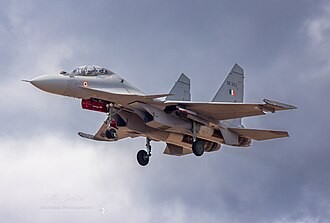
Su-30SM
The 'Su-30SM' is a twin-seat multirole fighter developed and produced by Irkut and Sukhoi in Russia. The first flight year was 2012, and its current status is 'in service.' The clues to the mission equipment highlight the combination of long-range missions, dual-seat mission distribution, and thrust vectoring. When viewing the Su-30SM as a multirole fighter, one should not rely solely on the paint scheme of similar variants but should verify the model name, operator, and mission for an accurate assessment.
Widening the view to include maintenance and redeployment environments clarifies how the 'Su-30SM' implements mission conversion and integration of armaments and sensors. The first flight in 2012 marks the beginning of technical development, not immediate deployment to service. The current status of the Su-30SM is 'in service,' and it is noted separately to avoid confusion with prototype, retired, and production models. The detailed specifications of the Su-30SM also vary according to armament and fuel configuration, so the primary mission takes precedence over a single number.
When comparing the 'Su-30SM' with the next entries, examine the number of engines, crew, radar and electronic warfare equipment, and the arrangement of armaments in that order. The mere name 'stealth' does not imply evasion of detection from all directions. The 'multirole fighter changing missions' is not a ranking to glorify the destructive power of the Su-30SM or determine a winner in a hypothetical engagement. The essential information necessary to understand the aviation technology and operational profile of the Su-30SM comes first from the connected manufacturer, military, and museum sources. Images of the Su-30SM utilize aircraft photos verifiable through Wikimedia Commons via Wikipedia.
Widening the view to include maintenance and redeployment environments clarifies how the 'Su-30SM' implements mission conversion and integration of armaments and sensors. The first flight in 2012 marks the beginning of technical development, not immediate deployment to service. The current status of the Su-30SM is 'in service,' and it is noted separately to avoid confusion with prototype, retired, and production models. The detailed specifications of the Su-30SM also vary according to armament and fuel configuration, so the primary mission takes precedence over a single number.
When comparing the 'Su-30SM' with the next entries, examine the number of engines, crew, radar and electronic warfare equipment, and the arrangement of armaments in that order. The mere name 'stealth' does not imply evasion of detection from all directions. The 'multirole fighter changing missions' is not a ranking to glorify the destructive power of the Su-30SM or determine a winner in a hypothetical engagement. The essential information necessary to understand the aviation technology and operational profile of the Su-30SM comes first from the connected manufacturer, military, and museum sources. Images of the Su-30SM utilize aircraft photos verifiable through Wikimedia Commons via Wikipedia.
제작사 이르쿠트·수호이
국가 러시아
첫 비행 2012년
주요 역할 복좌 다목적 전투기
상태 현역
이미지 출처 Wikipedia/Wikimedia Commons · Sukhoi Su-30MKI
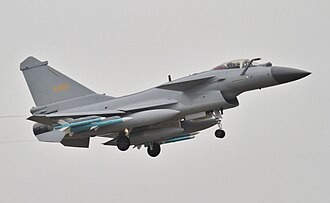
Chengdu J-10C
The 'Chengdu J-10C' is a single-engine multirole fighter developed and produced by Chengdu Aircraft Industry Group in China. The first flight year was 2013, and its current status is 'in service.' The important change in the aircraft lineage is the integration of AESA radar and modern armaments into the delta wing and canard design. When evaluating the Chengdu J-10C as a multirole fighter, one should not rely solely on the paint scheme of similar variants but should verify the model name, operator, and mission for an accurate assessment.
By comparing previous and subsequent models, it becomes clearer how the 'Chengdu J-10C' implements mission conversion and integration of armaments and sensors. The first flight in 2013 marks the beginning of technical development, not immediate deployment to service. The current status of the Chengdu J-10C is 'in service,' and it is noted separately to avoid confusion with prototype, retired, and production models. The detailed specifications of the Chengdu J-10C also vary according to armament and fuel configuration, so the primary mission takes precedence over a single number.
When comparing the 'Chengdu J-10C' with the next entries, examine the number of engines, crew, radar and electronic warfare equipment, and the arrangement of armaments in that order. Carrier-based aircraft should be viewed alongside the aircraft's takeoff and landing system on aircraft carriers. The 'multirole fighter changing missions' is not a ranking to glorify the destructive power of the Chengdu J-10C or determine a winner in a hypothetical engagement. The essential information necessary to understand the aviation technology and operational profile of the Chengdu J-10C comes first from the connected manufacturer, military, and museum sources. Images of the Chengdu J-10C utilize aircraft photos verifiable through Wikimedia Commons via Wikipedia.
By comparing previous and subsequent models, it becomes clearer how the 'Chengdu J-10C' implements mission conversion and integration of armaments and sensors. The first flight in 2013 marks the beginning of technical development, not immediate deployment to service. The current status of the Chengdu J-10C is 'in service,' and it is noted separately to avoid confusion with prototype, retired, and production models. The detailed specifications of the Chengdu J-10C also vary according to armament and fuel configuration, so the primary mission takes precedence over a single number.
When comparing the 'Chengdu J-10C' with the next entries, examine the number of engines, crew, radar and electronic warfare equipment, and the arrangement of armaments in that order. Carrier-based aircraft should be viewed alongside the aircraft's takeoff and landing system on aircraft carriers. The 'multirole fighter changing missions' is not a ranking to glorify the destructive power of the Chengdu J-10C or determine a winner in a hypothetical engagement. The essential information necessary to understand the aviation technology and operational profile of the Chengdu J-10C comes first from the connected manufacturer, military, and museum sources. Images of the Chengdu J-10C utilize aircraft photos verifiable through Wikimedia Commons via Wikipedia.
제작사 청두항공공업집단
국가 중국
첫 비행 2013년
주요 역할 단발 다목적 전투기
상태 현역
이미지 출처 Wikipedia/Wikimedia Commons · Chengdu J-10
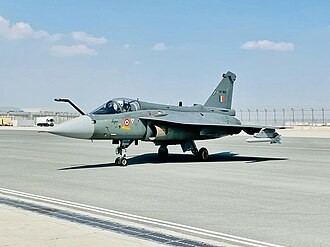
HAL Tejas Mk1A
The 'HAL Tejas Mk1A' is a lightweight, multi-role fighter aircraft developed and produced by Hindustan Aeronautics Limited (HAL) from India. Its first flight year is 2024, and its current status is 'in production and induction.' The key to understanding its operational deployment lies in the improvements in radar and electronic warfare based on the lightweight delta wing design. When considering the HAL Tejas Mk1A as a multi-role fighter capable of switching between various missions, it’s crucial not to rely solely on similar paint schemes of derivative models; instead, one should check the model designation, the operating entity, and the mission to accurately position it.
Dividing the external and internal armament conditions makes it clearer how the HAL Tejas Mk1A implements mission transitions and armament-sensor integration. The first flight of the HAL Tejas Mk1A in 2024 is the starting point for technological development, and does not immediately imply operational deployment. Currently, the status of the HAL Tejas Mk1A is 'in production and induction,' which is important to note separately to avoid confusion with prototype, retired, and aircraft currently in production with operational ones. The detailed specifications of the HAL Tejas Mk1A vary according to its armament, fuel configuration, and upgraded versions, so the main mission has been prioritized over singular figures.
When comparing the 'HAL Tejas Mk1A' with the following items, let's look at the number of engines, crew, radar and electronic warfare equipment, and where the armaments are mounted both internally and externally in that order. It’s also worthwhile to examine the operational experiences left by retired models for subsequent generations. The concept of 'a multi-role fighter that can change missions with a single platform' should not be misinterpreted as praising the destructive capability of the HAL Tejas Mk1A or establishing a ranking to determine winners in virtual engagements. The essential information necessary to understand the aviation technology and operators of the HAL Tejas Mk1A prioritizes the connected manufacturer, military, and museum resources. The images of the HAL Tejas Mk1A are sourced from its photo lineage via Wikipedia to confirm the original lineage on Wikimedia Commons.
Dividing the external and internal armament conditions makes it clearer how the HAL Tejas Mk1A implements mission transitions and armament-sensor integration. The first flight of the HAL Tejas Mk1A in 2024 is the starting point for technological development, and does not immediately imply operational deployment. Currently, the status of the HAL Tejas Mk1A is 'in production and induction,' which is important to note separately to avoid confusion with prototype, retired, and aircraft currently in production with operational ones. The detailed specifications of the HAL Tejas Mk1A vary according to its armament, fuel configuration, and upgraded versions, so the main mission has been prioritized over singular figures.
When comparing the 'HAL Tejas Mk1A' with the following items, let's look at the number of engines, crew, radar and electronic warfare equipment, and where the armaments are mounted both internally and externally in that order. It’s also worthwhile to examine the operational experiences left by retired models for subsequent generations. The concept of 'a multi-role fighter that can change missions with a single platform' should not be misinterpreted as praising the destructive capability of the HAL Tejas Mk1A or establishing a ranking to determine winners in virtual engagements. The essential information necessary to understand the aviation technology and operators of the HAL Tejas Mk1A prioritizes the connected manufacturer, military, and museum resources. The images of the HAL Tejas Mk1A are sourced from its photo lineage via Wikipedia to confirm the original lineage on Wikimedia Commons.
제작사 힌두스탄 항공
국가 인도
첫 비행 2024년
주요 역할 경량 다목적 전투기
상태 생산·전력화 이행
이미지 출처 Wikipedia/Wikimedia Commons · HAL Tejas
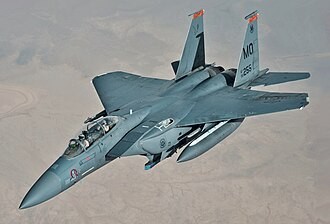
F-15E Strike Eagle
The 'F-15E Strike Eagle' is a two-seat strike fighter developed and produced by McDonnell Douglas and Boeing from the United States. Its first flight year is 1986, and its current status is 'in active service.' The point to note regarding its development status and performance is the extension of range and payload capacity for long-range precision strikes. When looking at the F-15E Strike Eagle as a multi-role fighter that can switch between various missions, it's crucial not to rely solely on similar paint schemes of derivative models; instead, one should check the model designation, operating entity, and mission for accurate positioning.
Cross-referencing the manufacturer’s descriptions and operating agency data makes it clearer how the 'F-15E Strike Eagle' implements mission transitions and armament-sensor integration. The first flight of the F-15E Strike Eagle in 1986 marks the starting point for technological development and does not imply immediate operational deployment. The current status of the F-15E Strike Eagle is 'in active service,' which is important to note separately to avoid confusion with prototype, retired, and aircraft currently in production with operational ones. The detailed specifications of the F-15E Strike Eagle vary based on its armament, fuel composition, and upgrade version, hence the main mission has been prioritized over singular figures.
When comparing the 'F-15E Strike Eagle' with the following items, let's look at the number of engines, crew, radar and electronic warfare equipment, and where the armaments are mounted both internally and externally in that order. Development schedules may change, so it’s important to accurately confirm stage designations. The idea of 'a multi-role fighter that can change missions with a single platform' is not intended to praise the destructive capability of the F-15E Strike Eagle or establish a ranking to determine winners in virtual engagements. The essential information necessary to understand the aviation technology and operators of the F-15E Strike Eagle prioritizes the connected manufacturer, military, and museum resources. Images of the F-15E Strike Eagle are sourced from its photo lineage via Wikipedia to confirm the original lineage on Wikimedia Commons.
Cross-referencing the manufacturer’s descriptions and operating agency data makes it clearer how the 'F-15E Strike Eagle' implements mission transitions and armament-sensor integration. The first flight of the F-15E Strike Eagle in 1986 marks the starting point for technological development and does not imply immediate operational deployment. The current status of the F-15E Strike Eagle is 'in active service,' which is important to note separately to avoid confusion with prototype, retired, and aircraft currently in production with operational ones. The detailed specifications of the F-15E Strike Eagle vary based on its armament, fuel composition, and upgrade version, hence the main mission has been prioritized over singular figures.
When comparing the 'F-15E Strike Eagle' with the following items, let's look at the number of engines, crew, radar and electronic warfare equipment, and where the armaments are mounted both internally and externally in that order. Development schedules may change, so it’s important to accurately confirm stage designations. The idea of 'a multi-role fighter that can change missions with a single platform' is not intended to praise the destructive capability of the F-15E Strike Eagle or establish a ranking to determine winners in virtual engagements. The essential information necessary to understand the aviation technology and operators of the F-15E Strike Eagle prioritizes the connected manufacturer, military, and museum resources. Images of the F-15E Strike Eagle are sourced from its photo lineage via Wikipedia to confirm the original lineage on Wikimedia Commons.
제작사 맥도널 더글러스·보잉
국가 미국
첫 비행 1986년
주요 역할 복좌 타격 전투기
상태 현역
이미지 출처 Wikipedia/Wikimedia Commons · McDonnell Douglas F-15E Strike Eagle
The term 'multirole' does not mean excelling equally in all missions. The actual capabilities vary based on how each air force has integrated radars, weapons, and data links, and how they manage pilots and maintenance personnel.
When making comparisons, it's essential to look at the entire system, including training, maintenance, armament, and base facilities, not just the aircraft price. Instead of lining up the FA-50 and F-35A by the same yardstick, distinguishing the missions and risk environments designed for each makes the roles of lightweight fighters and high-performance stealth aircraft much clearer. Understanding a multirole fighter changing missions requires recognizing not just the specifications but also the operational status and mission frameworks.
When making comparisons, it's essential to look at the entire system, including training, maintenance, armament, and base facilities, not just the aircraft price. Instead of lining up the FA-50 and F-35A by the same yardstick, distinguishing the missions and risk environments designed for each makes the roles of lightweight fighters and high-performance stealth aircraft much clearer. Understanding a multirole fighter changing missions requires recognizing not just the specifications but also the operational status and mission frameworks.
한눈에 보기
10개
F-16V Viper
록히드 마틴 · 미국 · 2015년 · 단발 다목적 전투기 · 생산·개량 중 · Wikipedia/Wikimedia Commons · General Dynamics F-16 Fighting Falcon
F-35A Lightning II
록히드 마틴 · 미국·국제 공동개발 · 2006년 · 스텔스 다목적 전투기 · 현역 · Wikipedia/Wikimedia Commons · Lockheed Martin F-35 Lightning II
Dassault Rafale C/B
다쏘 아비아시옹 · 프랑스 · 1991년 · 옴니롤 전투기 · 현역 · Wikipedia/Wikimedia Commons · Dassault Rafale
Eurofighter Typhoon
유로파이터 컨소시엄 · 유럽 4개국 · 1994년 · 다목적 전투기 · 현역 · Wikipedia/Wikimedia Commons · Eurofighter Typhoon
Saab Gripen E
사브 · 스웨덴 · 2017년 · 경량 다목적 전투기 · 전력화 중 · Wikipedia/Wikimedia Commons · Saab JAS 39 Gripen
FA-50 Fighting Eagle
한국항공우주산업 · 대한민국 · 2011년 · 경전투기 · 현역·수출 운용 · Wikipedia/Wikimedia Commons · KAI T-50 Golden Eagle
Su-30SM
이르쿠트·수호이 · 러시아 · 2012년 · 복좌 다목적 전투기 · 현역 · Wikipedia/Wikimedia Commons · Sukhoi Su-30MKI
Chengdu J-10C
청두항공공업집단 · 중국 · 2013년 · 단발 다목적 전투기 · 현역 · Wikipedia/Wikimedia Commons · Chengdu J-10
HAL Tejas Mk1A
힌두스탄 항공 · 인도 · 2024년 · 경량 다목적 전투기 · 생산·전력화 이행 · Wikipedia/Wikimedia Commons · HAL Tejas
F-15E Strike Eagle
맥도널 더글러스·보잉 · 미국 · 1986년 · 복좌 타격 전투기 · 현역 · Wikipedia/Wikimedia Commons · McDonnell Douglas F-15E Strike Eagle
#Fighter Jet#Military Aircraft#Aircraft#Aviation Technology#Mission Transition and Weapon/Sensor Integration
이 포스팅은 쿠팡 파트너스 활동의 일환으로, 이에 따른 일정액의 수수료를 제공받습니다.
댓글 0
로그인 후 댓글을 작성할 수 있습니다.
첫 댓글을 남겨보세요.
이런 리스트는 어때요?


이런 리스트도 추천해요


🎲
여기서 멈추기엔 아쉽잖아?
다음에 뭘 볼지 고민하는 시간이 제일 아까워.
주사위가 대신 골라줄게 — 무슨 리스트가 튀어나올지는 굴려봐야 알지.
안 누르면… 평생 궁금하지 않겠어? 👀