Collection
Science
2026.09.11
Fighter Jets That Changed Generations of the Republic of Korea Air Force
From Korean War Propeller Aircraft to the Domestically Developed KF-21
The history of fighter jets in the Republic of Korea Air Force (ROKA) is not solely a record of imports from abroad. It started with the F-51D for combat missions, expanded the jet era with the F-86, F-4, and F-5, and progressed through the domestic production of the F-4 and KF-16, leading to the development of the FA-50 and KF-21.
This list examines eleven actual aircraft in chronological order, illustrating the evolution of missions and industrial foundations. It distinguishes between aircraft that have already been retired, those currently in operation, and the KF-21, which is in the development and production phase. The focus is not merely on performance rankings but on the significance of generational transitions. A thorough understanding of the fighter jets that changed generations in the ROKA requires examining not just the specifications, but also their operational status and mission systems.
This list examines eleven actual aircraft in chronological order, illustrating the evolution of missions and industrial foundations. It distinguishes between aircraft that have already been retired, those currently in operation, and the KF-21, which is in the development and production phase. The focus is not merely on performance rankings but on the significance of generational transitions. A thorough understanding of the fighter jets that changed generations in the ROKA requires examining not just the specifications, but also their operational status and mission systems.
F-51D 머스탱
F-51D Mustang
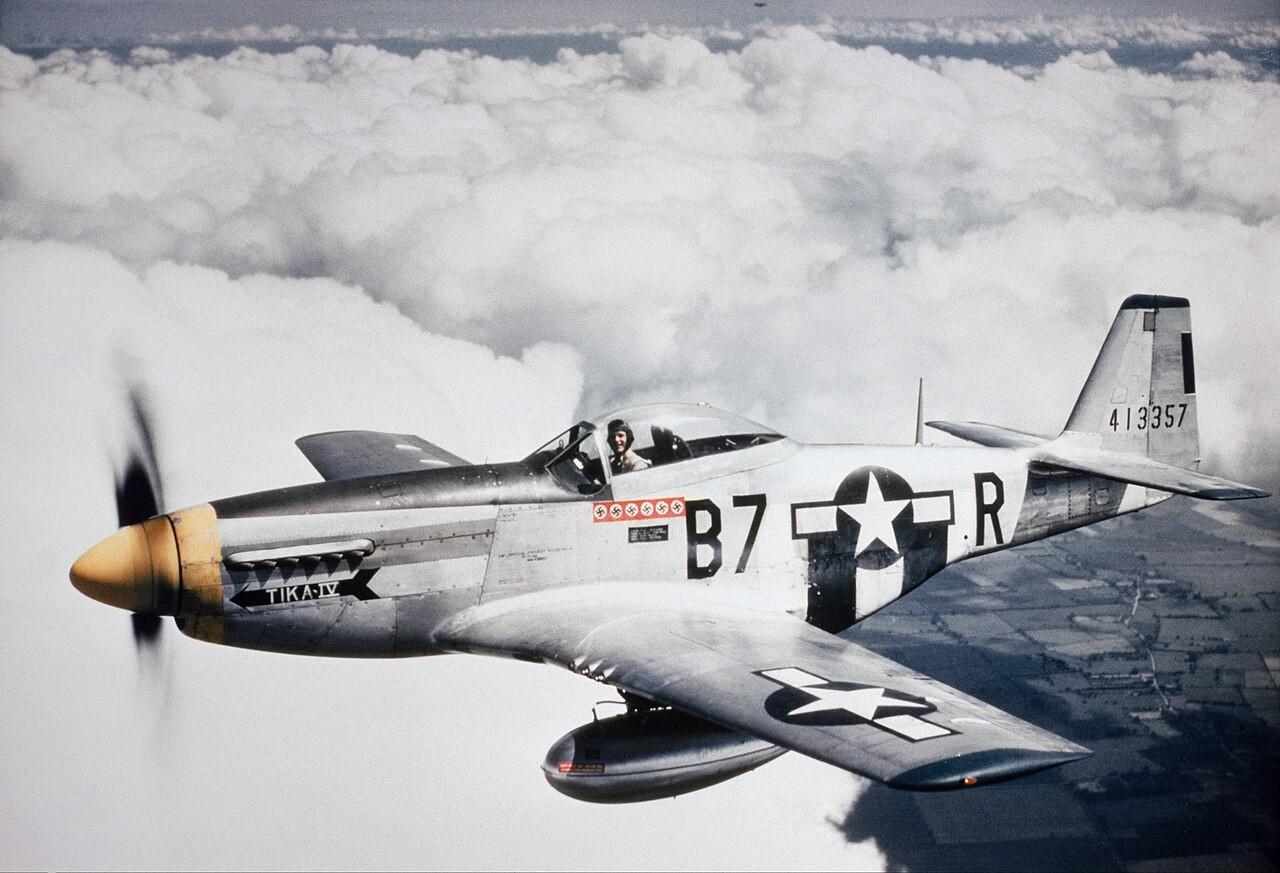
The ‘F-51D Mustang’ is a propeller fighter developed and produced by North American Aviation. Its first flight occurred in 1940, and its current status is ‘retired from the Republic of Korea Air Force’. The most notable point in its appearance is that it was responsible for the ROKA's first combat mission during the early Korean War. When viewing the F-51D Mustang among the fighter jets that changed generations in the ROKA, it is important not to rely solely on similar derivative paint schemes but to confirm the model name, operational entity, and mission for accurate context.
By examining the placement of the wings and intakes, it becomes clearer how the ‘F-51D Mustang’ represented a shift in the generational capabilities of the ROKA. The F-51D Mustang’s 1940 first flight marked the start of technological development, but it did not imply immediate operational deployment. Its current status is ‘retired from the ROKA’, a separate note included to avoid confusion with prototype, retired, and production aircraft in active service. The detailed specifications of the F-51D Mustang also vary depending on armament and fuel composition, prioritizing primary missions over single figures.
When comparing the ‘F-51D Mustang’ to the next item, consider the number of engines, crew, radar and electronic warfare equipment, and weapon placements inside and outside the aircraft in that order. Don’t define superiority solely by maximum speed but look at the overall mission. The ‘fighter jets that changed generations in the Republic of Korea Air Force’ do not aim to praise the destructive power of the F-51D Mustang or rank a winner in hypothetical engagements. Important basic information needed to understand the aviation technology and operators of the F-51D Mustang has prioritized connected sources relating to manufacturers, military, and museum materials. The image of the F-51D Mustang uses aircraft photos that can verify their original lineage through Wikimedia Commons via Wikipedia.
By examining the placement of the wings and intakes, it becomes clearer how the ‘F-51D Mustang’ represented a shift in the generational capabilities of the ROKA. The F-51D Mustang’s 1940 first flight marked the start of technological development, but it did not imply immediate operational deployment. Its current status is ‘retired from the ROKA’, a separate note included to avoid confusion with prototype, retired, and production aircraft in active service. The detailed specifications of the F-51D Mustang also vary depending on armament and fuel composition, prioritizing primary missions over single figures.
When comparing the ‘F-51D Mustang’ to the next item, consider the number of engines, crew, radar and electronic warfare equipment, and weapon placements inside and outside the aircraft in that order. Don’t define superiority solely by maximum speed but look at the overall mission. The ‘fighter jets that changed generations in the Republic of Korea Air Force’ do not aim to praise the destructive power of the F-51D Mustang or rank a winner in hypothetical engagements. Important basic information needed to understand the aviation technology and operators of the F-51D Mustang has prioritized connected sources relating to manufacturers, military, and museum materials. The image of the F-51D Mustang uses aircraft photos that can verify their original lineage through Wikimedia Commons via Wikipedia.
제작사 노스아메리칸
국가 미국
첫 비행 1940년
주요 역할 프로펠러 전투기
상태 대한민국 공군 퇴역
이미지 출처 Wikipedia/Wikimedia Commons · North American P-51 Mustang
F-86F 세이버
F-86F Sabre
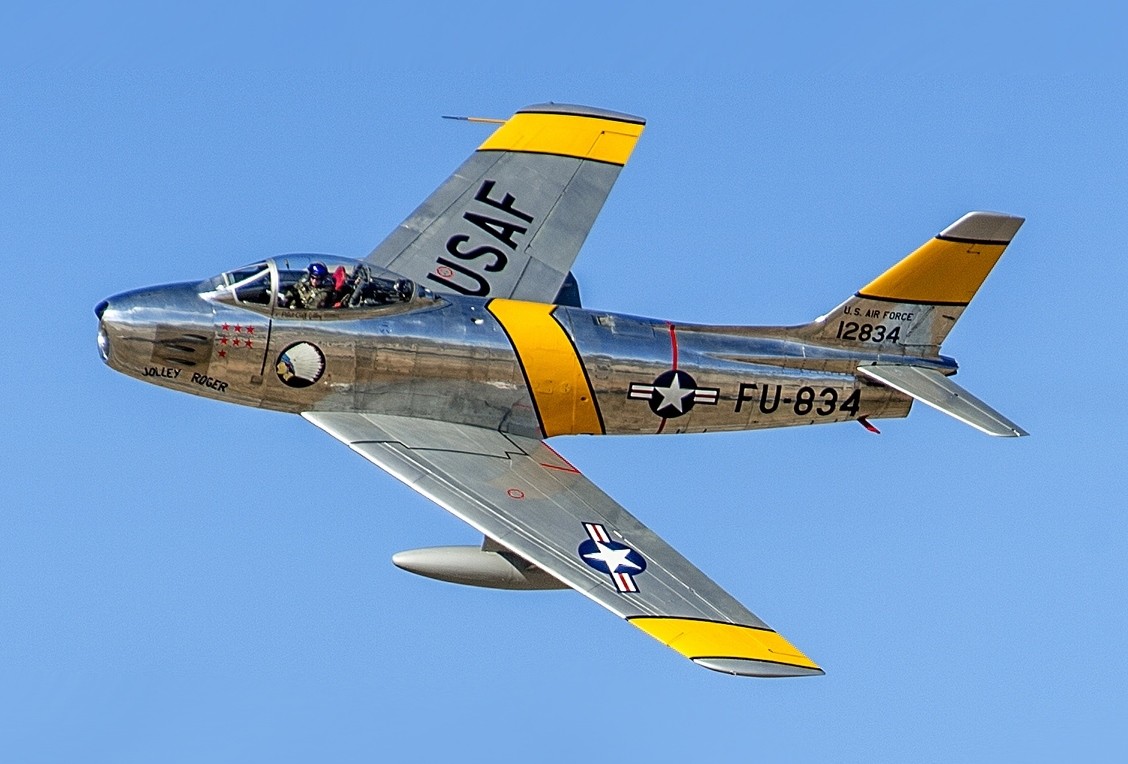
The ‘F-86F Sabre’ is an early jet fighter developed and produced by North American Aviation. Its first flight took place in 1947, and its current status is ‘retired from the Republic of Korea Air Force’. The core point from an operational perspective is that it marked the beginning of the ROKA's full-fledged jet fighter era. When viewing the F-86F Sabre among the fighter jets that changed generations in the ROKA, it is important not to rely solely on similar derivative paint schemes but to confirm the model name, operational entity, and mission for precise context.
Reading the official mission descriptions clarifies how the ‘F-86F Sabre’ implemented generational changes in ROKA capabilities. The 1947 first flight of the F-86F Sabre was a starting point for technological development, not an immediate signal for operational deployment. The current status of the F-86F Sabre is ‘retired from the ROKA’, mentioned separately to prevent confusion with prototype or retired aircraft in active service. The detailed specifications of the F-86F Sabre also vary according to armament and fuel configuration, so the primary mission takes precedence over single values.
When comparing the ‘F-86F Sabre’ to the next item, consider the number of engines, crew sizes, radar and electronic warfare equipment, and where the armament is mounted inside and outside the aircraft in sequence. It’s important not to label test aircraft and active aircraft as the same. The ‘fighter jets that changed generations in the Republic of Korea Air Force’ do not aim to praise the destructive power of the F-86F Sabre or rank the winner of hypothetical engagements. Essential basic information for understanding the aviation technology and operators of the F-86F Sabre has prioritized connected sources relating to manufacturers, military, and museum materials. The image of the F-86F Sabre uses aircraft photos that can verify their original lineage through Wikimedia Commons via Wikipedia.
Reading the official mission descriptions clarifies how the ‘F-86F Sabre’ implemented generational changes in ROKA capabilities. The 1947 first flight of the F-86F Sabre was a starting point for technological development, not an immediate signal for operational deployment. The current status of the F-86F Sabre is ‘retired from the ROKA’, mentioned separately to prevent confusion with prototype or retired aircraft in active service. The detailed specifications of the F-86F Sabre also vary according to armament and fuel configuration, so the primary mission takes precedence over single values.
When comparing the ‘F-86F Sabre’ to the next item, consider the number of engines, crew sizes, radar and electronic warfare equipment, and where the armament is mounted inside and outside the aircraft in sequence. It’s important not to label test aircraft and active aircraft as the same. The ‘fighter jets that changed generations in the Republic of Korea Air Force’ do not aim to praise the destructive power of the F-86F Sabre or rank the winner of hypothetical engagements. Essential basic information for understanding the aviation technology and operators of the F-86F Sabre has prioritized connected sources relating to manufacturers, military, and museum materials. The image of the F-86F Sabre uses aircraft photos that can verify their original lineage through Wikimedia Commons via Wikipedia.
제작사 노스아메리칸
국가 미국
첫 비행 1947년
주요 역할 초기 제트 전투기
상태 대한민국 공군 퇴역
이미지 출처 Wikipedia/Wikimedia Commons · North American F-86 Sabre
F-4D 팬텀 II
F-4D Phantom II
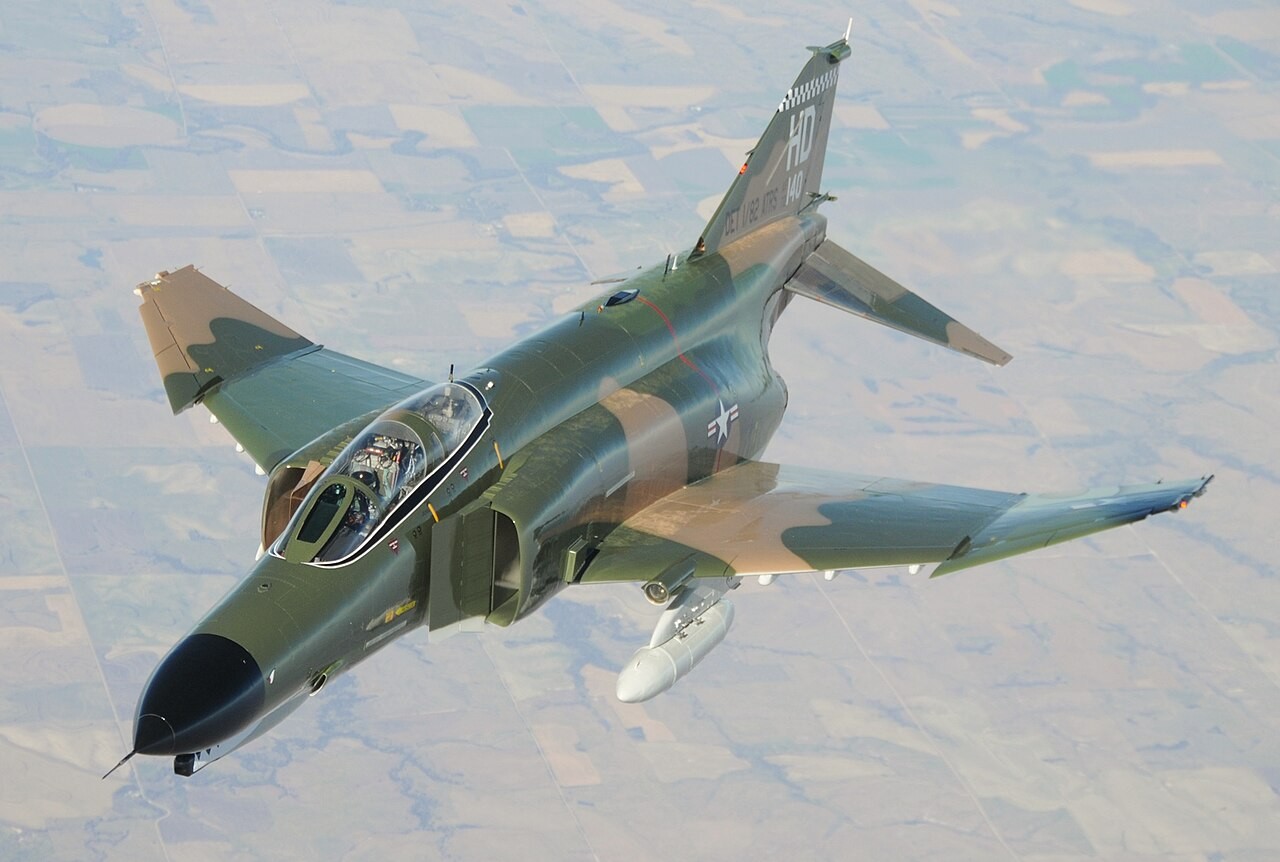
The ‘F-4D Phantom II’ is a twin-engine multi-role fighter developed and produced by McDonnell Douglas. Its first flight occurred in 1965, and its current status is ‘retired from the Republic of Korea Air Force’. The distinguishing characteristic of this aircraft is its long-range and large payload capability, leading to a qualitative leap in the air force's capabilities. When viewing the F-4D Phantom II among the fighter jets that changed generations in the ROKA, it is important not to rely solely on similar derivative paint schemes but to confirm the model name, operational entity, and mission for accurate context.
Putting together the first flight year and current status clarifies how the ‘F-4D Phantom II’ represented a generational change in the ROKA's aviation capabilities. The 1965 first flight of the F-4D Phantom II was a starting point for technological development, not an immediate signal for operational deployment. The current status of the F-4D Phantom II is ‘retired from the ROKA’, noted separately to avoid confusion with prototype, retired, and production aircraft in active service. The detailed specifications of the F-4D Phantom II also vary according to armament and fuel configuration, so the primary mission takes precedence over single values.
When comparing the ‘F-4D Phantom II’ to the next item, consider the number of engines, crew size, radar and electronic warfare equipment, and how the armament is mounted inside and outside the aircraft in sequence. It is essential to verify differences between export variants and modifications for operational countries. The ‘fighter jets that changed generations in the Republic of Korea Air Force’ do not aim to praise the destructive power of the F-4D Phantom II or rank the winner of hypothetical engagements. Essential basic information for understanding the aviation technology and operators of the F-4D Phantom II has prioritized connected sources relating to manufacturers, military, and museum materials. The image of the F-4D Phantom II uses aircraft photos that can verify their original lineage through Wikimedia Commons via Wikipedia.
Putting together the first flight year and current status clarifies how the ‘F-4D Phantom II’ represented a generational change in the ROKA's aviation capabilities. The 1965 first flight of the F-4D Phantom II was a starting point for technological development, not an immediate signal for operational deployment. The current status of the F-4D Phantom II is ‘retired from the ROKA’, noted separately to avoid confusion with prototype, retired, and production aircraft in active service. The detailed specifications of the F-4D Phantom II also vary according to armament and fuel configuration, so the primary mission takes precedence over single values.
When comparing the ‘F-4D Phantom II’ to the next item, consider the number of engines, crew size, radar and electronic warfare equipment, and how the armament is mounted inside and outside the aircraft in sequence. It is essential to verify differences between export variants and modifications for operational countries. The ‘fighter jets that changed generations in the Republic of Korea Air Force’ do not aim to praise the destructive power of the F-4D Phantom II or rank the winner of hypothetical engagements. Essential basic information for understanding the aviation technology and operators of the F-4D Phantom II has prioritized connected sources relating to manufacturers, military, and museum materials. The image of the F-4D Phantom II uses aircraft photos that can verify their original lineage through Wikimedia Commons via Wikipedia.
제작사 맥도널 더글러스
국가 미국
첫 비행 1965년
주요 역할 쌍발 다목적 전투기
상태 대한민국 공군 퇴역
이미지 출처 Wikipedia/Wikimedia Commons · McDonnell Douglas F-4 Phantom II
F-4E 팬텀 II
F-4E Phantom II
The ‘F-4E Phantom II’ is a twin-engine multi-role fighter developed and produced by McDonnell Douglas. Its first flight occurred in 1967, and its current status is ‘retired from the Republic of Korea Air Force’. Notable features observed alongside its photograph and specifications include its internal cannon and improved air-to-air and air-to-ground capabilities. When viewing the F-4E Phantom II among the fighter jets that changed generations in the ROKA, it is important not to rely solely on similar derivative paint schemes but to confirm the model name, operational entity, and mission for precise context.
By checking the number of cockpits and weapon placements, it becomes clearer how the ‘F-4E Phantom II’ represented a generational change in the ROKA's aviation capabilities. The 1967 first flight of the F-4E Phantom II marked a beginning for technological development, but it did not guarantee immediate operational deployment. The current status of the F-4E Phantom II is ‘retired from the ROKA’, mentioned separately to avoid confusion with prototype, retired, and production aircraft in active service. The detailed specifications of the F-4E Phantom II vary based on armament, fuel configuration, and improvement types, prioritizing primary missions over single figures.
When comparing the ‘F-4E Phantom II’ to the next item, consider the number of engines, crew size, radar and electronic warfare equipment, and how the armament is mounted inside and outside the aircraft in order. Distinguishing promotional phrases from actual unit deployments is important. The ‘fighter jets that changed generations in the Republic of Korea Air Force’ do not aim to praise the destructive power of the F-4E Phantom II or rank the winner of hypothetical engagements. Essential basic information for understanding the aviation technology and operators of the F-4E Phantom II has prioritized connected sources relating to manufacturers, military, and museum materials. The image of the F-4E Phantom II uses aircraft photos that can verify their original lineage through Wikimedia Commons via Wikipedia.
By checking the number of cockpits and weapon placements, it becomes clearer how the ‘F-4E Phantom II’ represented a generational change in the ROKA's aviation capabilities. The 1967 first flight of the F-4E Phantom II marked a beginning for technological development, but it did not guarantee immediate operational deployment. The current status of the F-4E Phantom II is ‘retired from the ROKA’, mentioned separately to avoid confusion with prototype, retired, and production aircraft in active service. The detailed specifications of the F-4E Phantom II vary based on armament, fuel configuration, and improvement types, prioritizing primary missions over single figures.
When comparing the ‘F-4E Phantom II’ to the next item, consider the number of engines, crew size, radar and electronic warfare equipment, and how the armament is mounted inside and outside the aircraft in order. Distinguishing promotional phrases from actual unit deployments is important. The ‘fighter jets that changed generations in the Republic of Korea Air Force’ do not aim to praise the destructive power of the F-4E Phantom II or rank the winner of hypothetical engagements. Essential basic information for understanding the aviation technology and operators of the F-4E Phantom II has prioritized connected sources relating to manufacturers, military, and museum materials. The image of the F-4E Phantom II uses aircraft photos that can verify their original lineage through Wikimedia Commons via Wikipedia.
제작사 맥도널 더글러스
국가 미국
첫 비행 1967년
주요 역할 쌍발 다목적 전투기
상태 대한민국 공군 퇴역
이미지 출처 Wikipedia/Wikimedia Commons · McDonnell Douglas F-4 Phantom II
F-5E/F 타이거 II
F-5E/F Tiger II
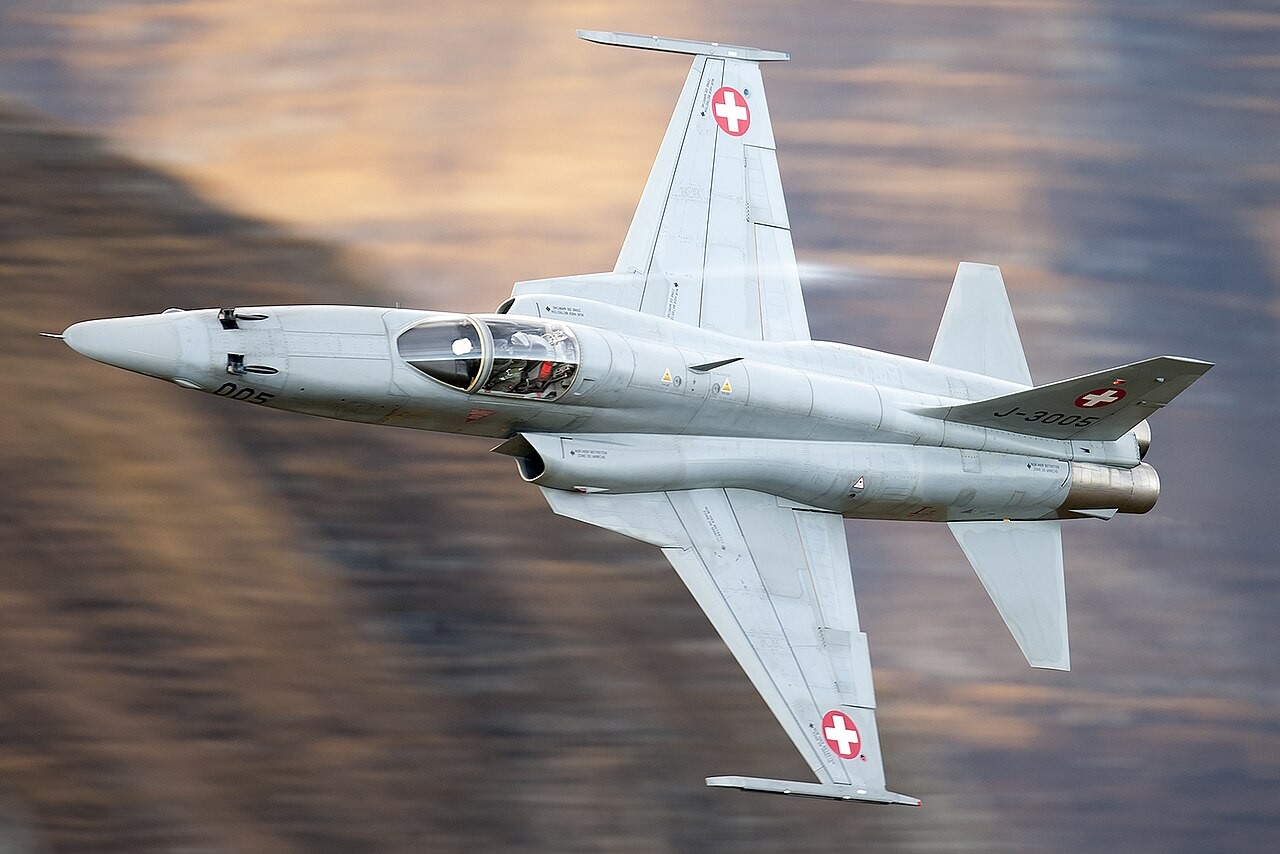
The ‘F-5E/F Tiger II’ is a lightweight fighter developed and produced by Northrop. Its first flight occurred in 1972, and its current status is ‘in operation with the Republic of Korea Air Force’. A point of comparison with aircraft from the same generation is its simple design and rapid responsiveness, enabling it to perform air defense missions for an extended period. When viewing the F-5E/F Tiger II among the fighter jets that changed generations in the ROKA, it is important not to rely solely on similar derivative paint schemes but to confirm the model name, operational entity, and mission for accurate context.
By contrasting land and maritime operational conditions, it becomes clearer how the ‘F-5E/F Tiger II’ represented a generational change in the ROKA's aviation capabilities. The 1972 first flight of the F-5E/F Tiger II marked the start of technological development, not immediate operational deployment. The current status of the F-5E/F Tiger II is ‘in operation with the Republic of Korea Air Force’, mentioned separately to prevent confusion with prototype or retired aircraft in active service. The detailed specifications of the F-5E/F Tiger II also vary depending on armament and fuel composition, so the primary mission takes precedence over single figures.
When comparing the ‘F-5E/F Tiger II’ to the next item, consider the number of engines, crew size, radar and electronic warfare equipment, and how the armament is mounted inside and outside the aircraft in sequence. The range can vary depending on mission conditions and payload configuration. The ‘fighter jets that changed generations in the Republic of Korea Air Force’ do not aim to praise the destructive power of the F-5E/F Tiger II or rank the winner of hypothetical engagements. Essential basic information for understanding the aviation technology and operators of the F-5E/F Tiger II has prioritized connected sources relating to manufacturers, military, and museum materials. The image of the F-5E/F Tiger II uses aircraft photos that can verify their original lineage through Wikimedia Commons via Wikipedia.
By contrasting land and maritime operational conditions, it becomes clearer how the ‘F-5E/F Tiger II’ represented a generational change in the ROKA's aviation capabilities. The 1972 first flight of the F-5E/F Tiger II marked the start of technological development, not immediate operational deployment. The current status of the F-5E/F Tiger II is ‘in operation with the Republic of Korea Air Force’, mentioned separately to prevent confusion with prototype or retired aircraft in active service. The detailed specifications of the F-5E/F Tiger II also vary depending on armament and fuel composition, so the primary mission takes precedence over single figures.
When comparing the ‘F-5E/F Tiger II’ to the next item, consider the number of engines, crew size, radar and electronic warfare equipment, and how the armament is mounted inside and outside the aircraft in sequence. The range can vary depending on mission conditions and payload configuration. The ‘fighter jets that changed generations in the Republic of Korea Air Force’ do not aim to praise the destructive power of the F-5E/F Tiger II or rank the winner of hypothetical engagements. Essential basic information for understanding the aviation technology and operators of the F-5E/F Tiger II has prioritized connected sources relating to manufacturers, military, and museum materials. The image of the F-5E/F Tiger II uses aircraft photos that can verify their original lineage through Wikimedia Commons via Wikipedia.
제작사 노스럽
국가 미국
첫 비행 1972년
주요 역할 경량 전투기
상태 대한민국 공군 운용
이미지 출처 Wikipedia/Wikimedia Commons · Northrop F-5
KF-5E/F 제공호
KF-5E/F (T-5) Haiseong
The ‘KF-5E/F (T-5) Haiseong’ is a lightweight fighter that was licensed produced by Korea Aerospace Industries. Its first flight occurred in 1982, and its current status is ‘in operation with the Republic of Korea Air Force’. The priority value emphasized by its designer is the accumulation of the aerospace industry through licensed production of the F-5E/F. When viewing the KF-5E/F (T-5) Haiseong among the fighter jets that changed generations in the ROKA, it is important not to rely solely on similar derivative paint schemes but to confirm the model name, operational entity, and mission for accurate context.
Examining the roles of the sensors and data links clarifies how the ‘KF-5E/F (T-5) Haiseong’ represented a generational change in the ROKA's aviation capabilities. The 1982 first flight of the KF-5E/F (T-5) Haiseong marked the start of technological development without immediately signaling operational deployment. The current status of the KF-5E/F (T-5) Haiseong is ‘in operation with the Republic of Korea Air Force’, mentioned separately to prevent confusion with prototype or retired aircraft in active service. The detailed specifications of the KF-5E/F (T-5) Haiseong also vary according to armament and fuel composition, prioritizing primary missions over single figures.
When comparing the ‘KF-5E/F (T-5) Haiseong’ to the next item, consider the number of engines, crew size, radar and electronic warfare equipment, and how the armament is mounted inside and outside the aircraft in sequence. Weapon compatibility must be validated through contracts and integration testing for actual capability. The ‘fighter jets that changed generations in the Republic of Korea Air Force’ do not aim to praise the destructive power of the KF-5E/F (T-5) Haiseong or rank the winner of hypothetical engagements. Essential basic information for understanding the aviation technology and operators of the KF-5E/F (T-5) Haiseong has prioritized connected sources relating to manufacturers, military, and museum materials. The image of the KF-5E/F (T-5) Haiseong uses aircraft photos that can verify their original lineage through Wikimedia Commons via Wikipedia.
Examining the roles of the sensors and data links clarifies how the ‘KF-5E/F (T-5) Haiseong’ represented a generational change in the ROKA's aviation capabilities. The 1982 first flight of the KF-5E/F (T-5) Haiseong marked the start of technological development without immediately signaling operational deployment. The current status of the KF-5E/F (T-5) Haiseong is ‘in operation with the Republic of Korea Air Force’, mentioned separately to prevent confusion with prototype or retired aircraft in active service. The detailed specifications of the KF-5E/F (T-5) Haiseong also vary according to armament and fuel composition, prioritizing primary missions over single figures.
When comparing the ‘KF-5E/F (T-5) Haiseong’ to the next item, consider the number of engines, crew size, radar and electronic warfare equipment, and how the armament is mounted inside and outside the aircraft in sequence. Weapon compatibility must be validated through contracts and integration testing for actual capability. The ‘fighter jets that changed generations in the Republic of Korea Air Force’ do not aim to praise the destructive power of the KF-5E/F (T-5) Haiseong or rank the winner of hypothetical engagements. Essential basic information for understanding the aviation technology and operators of the KF-5E/F (T-5) Haiseong has prioritized connected sources relating to manufacturers, military, and museum materials. The image of the KF-5E/F (T-5) Haiseong uses aircraft photos that can verify their original lineage through Wikimedia Commons via Wikipedia.
제작사 대한항공
국가 대한민국
첫 비행 1982년
주요 역할 면허생산 경량 전투기
상태 대한민국 공군 운용
이미지 출처 Wikipedia/Wikimedia Commons · Northrop F-5
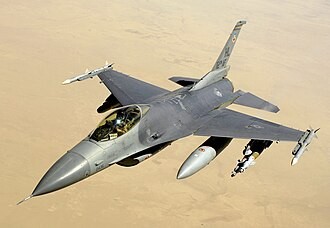
KF-16
The ‘KF-16’ is a multi-role fighter developed and produced by Samsung Aerospace and Korea Aerospace Industries. Its first flight occurred in 1992, and its current status is ‘in active service and upgraded’. Clues regarding mission equipment indicate its role primarily involves domestic production and continuous upgrading of combat capabilities. When viewing the KF-16 among the fighter jets that changed generations in the ROKA, it is important not to rely solely on similar derivative paint schemes but to confirm the model name, operational entity, and mission for accurate context.
By considering maintenance and re-deployment environments, it becomes clearer how the ‘KF-16’ represented a generational change in the ROKA's aviation capabilities. The 1992 first flight of the KF-16 marked a start for technological development, not immediate operational deployment. The current status of the KF-16 is ‘in active service and upgraded’, noted separately to avoid confusion with prototype or retired aircraft in active service. The detailed specifications of the KF-16 also vary based on armament and fuel composition, prioritizing primary missions over single figures.
When comparing the ‘KF-16’ to the next item, consider the number of engines, crew size, radar and electronic warfare equipment, and how the armament is mounted inside and outside the aircraft in order. The term stealth does not automatically imply evading detection from all directions. The ‘fighter jets that changed generations in the Republic of Korea Air Force’ do not aim to praise the destructive power of the KF-16 or rank a winner in hypothetical engagements. Essential basic information for understanding the aviation technology and operators of the KF-16 has prioritized connected sources relating to manufacturers, military, and museum materials. The image of the KF-16 uses aircraft photos that can verify their original lineage through Wikimedia Commons via Wikipedia.
By considering maintenance and re-deployment environments, it becomes clearer how the ‘KF-16’ represented a generational change in the ROKA's aviation capabilities. The 1992 first flight of the KF-16 marked a start for technological development, not immediate operational deployment. The current status of the KF-16 is ‘in active service and upgraded’, noted separately to avoid confusion with prototype or retired aircraft in active service. The detailed specifications of the KF-16 also vary based on armament and fuel composition, prioritizing primary missions over single figures.
When comparing the ‘KF-16’ to the next item, consider the number of engines, crew size, radar and electronic warfare equipment, and how the armament is mounted inside and outside the aircraft in order. The term stealth does not automatically imply evading detection from all directions. The ‘fighter jets that changed generations in the Republic of Korea Air Force’ do not aim to praise the destructive power of the KF-16 or rank a winner in hypothetical engagements. Essential basic information for understanding the aviation technology and operators of the KF-16 has prioritized connected sources relating to manufacturers, military, and museum materials. The image of the KF-16 uses aircraft photos that can verify their original lineage through Wikimedia Commons via Wikipedia.
제작사 삼성항공·한국항공우주산업
국가 대한민국·미국
첫 비행 1992년
주요 역할 다목적 전투기
상태 현역·성능개량
이미지 출처 Wikipedia/Wikimedia Commons · General Dynamics F-16 Fighting Falcon
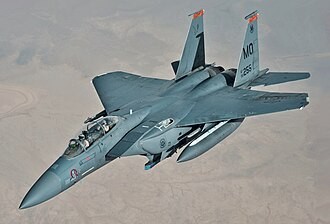
F-15K Slam Eagle
The ‘F-15K Slam Eagle’ is a long-range multi-role fighter developed and produced by Boeing. Its first flight occurred in 2005, and its current status is ‘in service’. A significant change in the aircraft lineage is its enhanced capabilities for long-range precision strikes and substantial payload capacity. When viewing the F-15K Slam Eagle among the fighter jets that changed generations in the ROKA, it is important not to rely solely on similar derivative paint schemes but to confirm the model name, operational entity, and mission for precise context.
Comparing previous and subsequent models allows for a clearer understanding of how the ‘F-15K Slam Eagle’ represented a generational change in the ROKA's aviation capabilities. The 2005 first flight of the F-15K Slam Eagle marked the beginning of technological development without immediately indicating operational deployment. The current status of the F-15K Slam Eagle is ‘in service’, noted separately to prevent confusion with prototype, retired, and production aircraft in active service. The detailed specifications of the F-15K Slam Eagle also vary based on armament and fuel configuration, prioritizing primary missions over single values.
When comparing the ‘F-15K Slam Eagle’ to the next item, consider the number of engines, crew size, radar and electronic warfare equipment, and how the armament is mounted inside and outside the aircraft in sequence. Notably, for carrier-based aircraft, the examination should include the aircraft and aircraft carrier take-off and landing systems. The ‘fighter jets that changed generations in the Republic of Korea Air Force’ do not aim to praise the destructive power of the F-15K Slam Eagle or nominate a victor in hypothetical engagements. Essential basic information for understanding the aviation technology and operators of the F-15K Slam Eagle has prioritized connected sources relating to manufacturers, military, and museum materials. The image of the F-15K Slam Eagle uses aircraft photos that can verify their original lineage through Wikimedia Commons via Wikipedia.
Comparing previous and subsequent models allows for a clearer understanding of how the ‘F-15K Slam Eagle’ represented a generational change in the ROKA's aviation capabilities. The 2005 first flight of the F-15K Slam Eagle marked the beginning of technological development without immediately indicating operational deployment. The current status of the F-15K Slam Eagle is ‘in service’, noted separately to prevent confusion with prototype, retired, and production aircraft in active service. The detailed specifications of the F-15K Slam Eagle also vary based on armament and fuel configuration, prioritizing primary missions over single values.
When comparing the ‘F-15K Slam Eagle’ to the next item, consider the number of engines, crew size, radar and electronic warfare equipment, and how the armament is mounted inside and outside the aircraft in sequence. Notably, for carrier-based aircraft, the examination should include the aircraft and aircraft carrier take-off and landing systems. The ‘fighter jets that changed generations in the Republic of Korea Air Force’ do not aim to praise the destructive power of the F-15K Slam Eagle or nominate a victor in hypothetical engagements. Essential basic information for understanding the aviation technology and operators of the F-15K Slam Eagle has prioritized connected sources relating to manufacturers, military, and museum materials. The image of the F-15K Slam Eagle uses aircraft photos that can verify their original lineage through Wikimedia Commons via Wikipedia.
제작사 보잉
국가 미국
첫 비행 2005년
주요 역할 장거리 다목적 전투기
상태 현역
이미지 출처 Wikipedia/Wikimedia Commons · McDonnell Douglas F-15E Strike Eagle
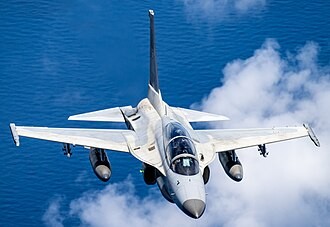
FA-50 Fighting Eagle
'FA-50 Fighting Eagle' is a light combat aircraft developed and produced by Korea Aerospace Industries. Its first flight was in 2011, and it is currently in active service. The key to understanding its operational use lies in its expansion from domestically produced trainer aircraft to a combat platform for conversion training and mission execution. When viewing the FA-50 Fighting Eagle, which transformed the generations of the Republic of Korea Air Force, one should not rely solely on the similar paint schemes of its variants, but also check the model designation, operational entities, and missions to accurately determine its position.
Dividing the external and internal armament conditions clarifies how the 'FA-50 Fighting Eagle' has represented a generational shift in the combat power of the Republic of Korea Air Force. The first flight of the FA-50 Fighting Eagle in 2011 marked the starting point for technical development, but it does not directly indicate its operational deployment. The current status of the FA-50 Fighting Eagle is 'active,' and the reason for stating this separately is to avoid confusion with prototypes, retired aircraft, or those currently in production. The detailed specifications of the FA-50 Fighting Eagle vary also depending on armament and fuel configuration, so the primary mission has been prioritized over a singular figure.
When comparing the 'FA-50 Fighting Eagle' with the following items, let’s examine in order the number of engines, crew capacity, radar and electronic warfare equipment, and where the armaments are mounted, both inside and outside the aircraft. It is also valuable to look at the operational experiences left by retired aircraft for the next generation. Describing the 'transformation of generations of the Republic of Korea Air Force' does not intend to praise the destructive capabilities of the FA-50 Fighting Eagle or rank it in a virtual engagement. The essential information necessary for understanding the aviation technology and operational aspects of the FA-50 Fighting Eagle has prioritized connected materials from the manufacturers, military, and museum resources. The image of the FA-50 Fighting Eagle is sourced from Wikipedia, where you can check the original lineage of aircraft photos on Wikimedia Commons.
Dividing the external and internal armament conditions clarifies how the 'FA-50 Fighting Eagle' has represented a generational shift in the combat power of the Republic of Korea Air Force. The first flight of the FA-50 Fighting Eagle in 2011 marked the starting point for technical development, but it does not directly indicate its operational deployment. The current status of the FA-50 Fighting Eagle is 'active,' and the reason for stating this separately is to avoid confusion with prototypes, retired aircraft, or those currently in production. The detailed specifications of the FA-50 Fighting Eagle vary also depending on armament and fuel configuration, so the primary mission has been prioritized over a singular figure.
When comparing the 'FA-50 Fighting Eagle' with the following items, let’s examine in order the number of engines, crew capacity, radar and electronic warfare equipment, and where the armaments are mounted, both inside and outside the aircraft. It is also valuable to look at the operational experiences left by retired aircraft for the next generation. Describing the 'transformation of generations of the Republic of Korea Air Force' does not intend to praise the destructive capabilities of the FA-50 Fighting Eagle or rank it in a virtual engagement. The essential information necessary for understanding the aviation technology and operational aspects of the FA-50 Fighting Eagle has prioritized connected materials from the manufacturers, military, and museum resources. The image of the FA-50 Fighting Eagle is sourced from Wikipedia, where you can check the original lineage of aircraft photos on Wikimedia Commons.
제작사 한국항공우주산업
국가 대한민국
첫 비행 2011년
주요 역할 경전투기
상태 현역
이미지 출처 Wikipedia/Wikimedia Commons · KAI T-50 Golden Eagle
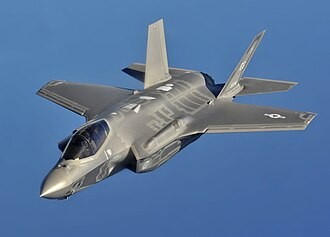
F-35A Lightning II
'F-35A Lightning II' is a stealth multirole fighter developed and produced by Lockheed Martin as part of a U.S. and international collaborative project. Its first flight was in 2006, and it is currently in active service with the Republic of Korea Air Force. The points of differentiation in its development and performance showcase its low observability and sensor fusion, forming the operational capabilities of the Air Force's fifth generation. When looking at the F-35A Lightning II, which transformed the generations of the Republic of Korea Air Force, do not rely solely on the similar paint schemes of its variants, but also verify the model designation, operational entities, and missions to capture its accurate positioning.
Cross-referencing the manufacturer’s explanation and operational data clarifies how the 'F-35A Lightning II' has represented a generational shift in the combat power of the Republic of Korea Air Force. The first flight of the F-35A Lightning II in 2006 marked a starting point for technological development, but it does not imply immediate operational deployment. The current status of the F-35A Lightning II is 'active in the Republic of Korea Air Force,' and this is stated separately to avoid confusion with prototypes, retired aircraft, or those currently in production. The detailed specifications of the F-35A Lightning II also change depending on armament and fuel configuration, thus prioritizing the primary mission over a singular number.
When comparing the 'F-35A Lightning II' with the following items, let’s examine in order the number of engines, crew capacity, radar and electronic warfare equipment, and the placement of armaments within and outside the aircraft. The development schedule may change, so it’s important to accurately confirm the stage names. The description of the 'transformation of generations of the Republic of Korea Air Force' does not aim to praise the destructive capabilities of the F-35A Lightning II or rank it in a virtual engagement. Essential information needed to understand the aviation technology and operational aspects of the F-35A Lightning II has prioritized connected materials from the manufacturers, military, and museum resources. The image of the F-35A Lightning II is sourced from Wikipedia, where you can check the original lineage of aircraft photos on Wikimedia Commons.
Cross-referencing the manufacturer’s explanation and operational data clarifies how the 'F-35A Lightning II' has represented a generational shift in the combat power of the Republic of Korea Air Force. The first flight of the F-35A Lightning II in 2006 marked a starting point for technological development, but it does not imply immediate operational deployment. The current status of the F-35A Lightning II is 'active in the Republic of Korea Air Force,' and this is stated separately to avoid confusion with prototypes, retired aircraft, or those currently in production. The detailed specifications of the F-35A Lightning II also change depending on armament and fuel configuration, thus prioritizing the primary mission over a singular number.
When comparing the 'F-35A Lightning II' with the following items, let’s examine in order the number of engines, crew capacity, radar and electronic warfare equipment, and the placement of armaments within and outside the aircraft. The development schedule may change, so it’s important to accurately confirm the stage names. The description of the 'transformation of generations of the Republic of Korea Air Force' does not aim to praise the destructive capabilities of the F-35A Lightning II or rank it in a virtual engagement. Essential information needed to understand the aviation technology and operational aspects of the F-35A Lightning II has prioritized connected materials from the manufacturers, military, and museum resources. The image of the F-35A Lightning II is sourced from Wikipedia, where you can check the original lineage of aircraft photos on Wikimedia Commons.
제작사 록히드 마틴
국가 미국·국제 공동개발
첫 비행 2006년
주요 역할 스텔스 다목적 전투기
상태 대한민국 공군 현역
이미지 출처 Wikipedia/Wikimedia Commons · Lockheed Martin F-35 Lightning II
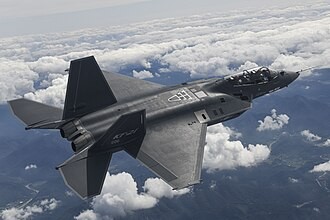
KF-21 Boramae
'KF-21 Boramae' is a 4.5 generation multirole fighter developed and produced by Korea Aerospace Industries. Its first flight was in 2022, and it is currently in the 'development and production transition' phase. A significant aspect within the Republic of Korea Air Force is the push for domestically-led development and gradual augmentation of armament and performance. When viewing the KF-21 Boramae, which transformed the generations of the Republic of Korea Air Force, one should not rely solely on the similar paint schemes of its variants, but also verify the model designation, operational entities, and missions to ensure accurate positioning.
By looking at the landing gear and wing structure in the photos, it becomes clearer how the 'KF-21 Boramae' represents a generational shift in the combat power of the Republic of Korea Air Force. The first flight of the KF-21 Boramae in 2022 marks the starting point for technical development, but it does not indicate immediate operational deployment. The current status of the KF-21 Boramae is 'development and production transition,' and this is stated separately to avoid confusion with prototypes, retired aircraft, or those currently in production. The detailed specifications of the KF-21 Boramae also vary depending on armament and fuel composition, so the primary mission has been prioritized over a singular figure.
When comparing the 'KF-21 Boramae' with the following items, let’s examine in order the number of engines, crew capacity, radar and electronic warfare equipment, and where the armaments are mounted, both inside and outside the aircraft. To avoid confusion with variants, confirm the source and aircraft type in the photos. The description of the 'transformation of generations of the Republic of Korea Air Force' does not aim to praise the destructive capabilities of the KF-21 Boramae or rank it in a virtual engagement. Essential information needed to understand the aviation technology and operational aspects of the KF-21 Boramae has prioritized connected materials from the manufacturers, military, and museum resources. The image of the KF-21 Boramae is sourced from Wikipedia, where you can check the original lineage of aircraft photos on Wikimedia Commons.
By looking at the landing gear and wing structure in the photos, it becomes clearer how the 'KF-21 Boramae' represents a generational shift in the combat power of the Republic of Korea Air Force. The first flight of the KF-21 Boramae in 2022 marks the starting point for technical development, but it does not indicate immediate operational deployment. The current status of the KF-21 Boramae is 'development and production transition,' and this is stated separately to avoid confusion with prototypes, retired aircraft, or those currently in production. The detailed specifications of the KF-21 Boramae also vary depending on armament and fuel composition, so the primary mission has been prioritized over a singular figure.
When comparing the 'KF-21 Boramae' with the following items, let’s examine in order the number of engines, crew capacity, radar and electronic warfare equipment, and where the armaments are mounted, both inside and outside the aircraft. To avoid confusion with variants, confirm the source and aircraft type in the photos. The description of the 'transformation of generations of the Republic of Korea Air Force' does not aim to praise the destructive capabilities of the KF-21 Boramae or rank it in a virtual engagement. Essential information needed to understand the aviation technology and operational aspects of the KF-21 Boramae has prioritized connected materials from the manufacturers, military, and museum resources. The image of the KF-21 Boramae is sourced from Wikipedia, where you can check the original lineage of aircraft photos on Wikimedia Commons.
제작사 한국항공우주산업
국가 대한민국
첫 비행 2022년
주요 역할 4.5세대 다목적 전투기
상태 개발·양산 이행
이미지 출처 Wikipedia/Wikimedia Commons · KAI KF-21 Boramae
When observing the aircraft of the ROKA in chronological order, we see that not only performance differs but also the role of domestic industry has evolved. The experience has broadened from importing completed aircraft, to licensed production and domestic assembly, the development of light combat training aircraft, and independent system integration.
The KF-21 should not be described as a fully operational force based solely on its first flight and production contract. It is necessary to distinguish between testing, gradual integration of armaments, and actual combat force capabilities. Conversely, the retired F-4 should not just be viewed as an outdated machine but also understood as a turning point that left a legacy in long-range strikes and maintenance and operational experience. A comprehensive understanding of the fighter jets that changed generations in the ROKA should include specifications, operational status, and mission systems.
The KF-21 should not be described as a fully operational force based solely on its first flight and production contract. It is necessary to distinguish between testing, gradual integration of armaments, and actual combat force capabilities. Conversely, the retired F-4 should not just be viewed as an outdated machine but also understood as a turning point that left a legacy in long-range strikes and maintenance and operational experience. A comprehensive understanding of the fighter jets that changed generations in the ROKA should include specifications, operational status, and mission systems.
한눈에 보기
11개
F-51D 머스탱
노스아메리칸 · 미국 · 1940년 · 프로펠러 전투기 · 대한민국 공군 퇴역 · Wikipedia/Wikimedia Commons · North American P-51 Mustang
F-86F 세이버
노스아메리칸 · 미국 · 1947년 · 초기 제트 전투기 · 대한민국 공군 퇴역 · Wikipedia/Wikimedia Commons · North American F-86 Sabre
F-4D 팬텀 II
맥도널 더글러스 · 미국 · 1965년 · 쌍발 다목적 전투기 · 대한민국 공군 퇴역 · Wikipedia/Wikimedia Commons · McDonnell Douglas F-4 Phantom II
F-4E 팬텀 II
맥도널 더글러스 · 미국 · 1967년 · 쌍발 다목적 전투기 · 대한민국 공군 퇴역 · Wikipedia/Wikimedia Commons · McDonnell Douglas F-4 Phantom II
F-5E/F 타이거 II
노스럽 · 미국 · 1972년 · 경량 전투기 · 대한민국 공군 운용 · Wikipedia/Wikimedia Commons · Northrop F-5
KF-5E/F 제공호
대한항공 · 대한민국 · 1982년 · 면허생산 경량 전투기 · 대한민국 공군 운용 · Wikipedia/Wikimedia Commons · Northrop F-5
KF-16
삼성항공·한국항공우주산업 · 대한민국·미국 · 1992년 · 다목적 전투기 · 현역·성능개량 · Wikipedia/Wikimedia Commons · General Dynamics F-16 Fighting Falcon
F-15K Slam Eagle
보잉 · 미국 · 2005년 · 장거리 다목적 전투기 · 현역 · Wikipedia/Wikimedia Commons · McDonnell Douglas F-15E Strike Eagle
FA-50 Fighting Eagle
한국항공우주산업 · 대한민국 · 2011년 · 경전투기 · 현역 · Wikipedia/Wikimedia Commons · KAI T-50 Golden Eagle
F-35A Lightning II
록히드 마틴 · 미국·국제 공동개발 · 2006년 · 스텔스 다목적 전투기 · 대한민국 공군 현역 · Wikipedia/Wikimedia Commons · Lockheed Martin F-35 Lightning II
KF-21 Boramae
한국항공우주산업 · 대한민국 · 2022년 · 4.5세대 다목적 전투기 · 개발·양산 이행 · Wikipedia/Wikimedia Commons · KAI KF-21 Boramae
#Fighter Jet#Military Aircraft#Aircraft#Aviation Technology#Generational Changes in the Republic of Korea Air Force
이 포스팅은 쿠팡 파트너스 활동의 일환으로, 이에 따른 일정액의 수수료를 제공받습니다.
댓글 0
로그인 후 댓글을 작성할 수 있습니다.
첫 댓글을 남겨보세요.
이런 리스트는 어때요?


이런 리스트도 추천해요




🎲
여기서 멈추기엔 아쉽잖아?
다음에 뭘 볼지 고민하는 시간이 제일 아까워.
주사위가 대신 골라줄게 — 무슨 리스트가 튀어나올지는 굴려봐야 알지.
안 누르면… 평생 궁금하지 않겠어? 👀