
Which Martin Is Ready to Use for Live Performance?
A Martin guide comparing the pickups, cutaways, and stage convenience of the GPC, SC, Road, and Junior series
When choosing a Martin for performing, how quickly you can get a stable sound after plugging into a PA matters as much as whether it sounds good unplugged. The traditional cutaway of the GPC, the asymmetrical body and Sure Align neck structure of the SC, and the small size of the D and 000 Junior offer different answers for upper-fret access and posture. Even among models with the same pickup, differences in body size and construction change how they respond in front of monitors and how you move while playing.
The Martin E-1 provides controls and a tuner inside the soundhole, which is convenient for simple gigs, while the LR Baggs systems on higher-end SC models offer the potential for finer blending and feedback control. A pickup name alone can’t guarantee the sound; the stability of the low end and resonance changes depending on the PA, acoustic amp, and the position of in-ear or floor monitors. With cutaways too, you should consider how often you actually use the upper frets.
This list compares actual current models, including the X Series GPC, the newly refreshed SC Modern, the 16 and 17 Series, and the Junior. First decide how often you travel, how long you perform, and what DI and monitor setup you use, and then look at the body, scale, pickups, and controls.
Martin GPC-X1E
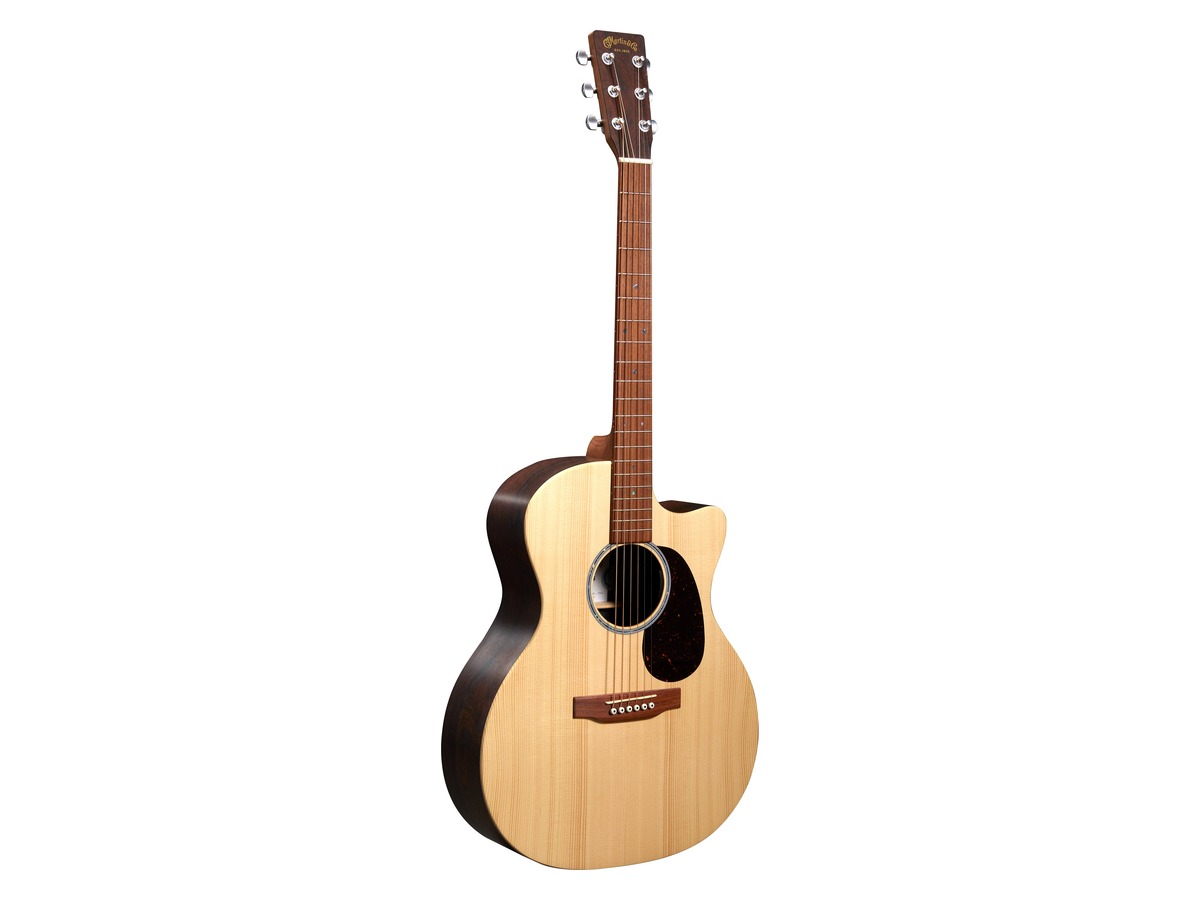
Martin GPC-X2E
Martin SC-10E Modern Sapele
Martin SC-10E Modern
Martin SC-13E Modern
Martin SC-18E
Martin SC-28E
Martin GPC-16E
Martin D-16E
Martin 000-17E Black Smoke
Martin D Jr E
Martin 000C Jr E
Before choosing a Martin for performing, don’t just try the guitar on its own; if possible, plug it directly into a DI or PA. When you turn up the volume, check whether the low end swells or certain notes boom, and whether you can quickly tame it with the phase switch and tone controls. Controls inside the soundhole keep the look clean but can feel hard to operate while playing, so it’s a good idea to test how they actually work.
The cutaways on the SC and GPC help with upper-fret access, but where the body meets your arm and torso and the strap balance differ between them. Junior models can help reduce the burden of travel and long performances, but you should check whether the short-scale tension and small-body response suit your taste. It’s also worth comparing installing a separate system on a high-end guitar without a pickup versus factory-equipped models, in terms of warranty and modification differences.
At rehearsal, test hard strumming, soft arpeggios, capo use, and feedback near the vocal mic. In real performances, it also matters whether the cable gets in the way of the strap and whether the tuner display is easy to see under stage lights.
As part of the Coupang Partners program, this post may earn a commission from qualifying purchases.
Comments 0
Log in to leave a comment.
Be the first to comment.
How about these lists?


You might also like


Not ready to stop here?
Wondering what to read next is the biggest waste of time.
Let the dice decide — you won't know what pops up until you roll.
If you don't press it… won't you wonder forever? 👀
