
Collection
Studying Abroad
2026.07.21
A Collection of Services for International Students Preparing to Study in Korea
Channels to check before and after you arrive, from school searches and scholarships to visas, living costs, and job information
For foreign students preparing to study in Korea, information about admission schedules, scholarships, visas, living expenses, dormitories, Korean language proficiency, and career prospects after graduation is just as important as choosing a university. Relying solely on online reviews can lead to missing out on specific admission requirements and official processes, and students may face greater burdens than expected with living costs or residency procedures once they arrive. This list compiles official resources that are beneficial for foreign students at each stage of their study preparation.
Study in Korea
Study in Korea is an official service that foreign students preparing to study in Korea should check first. It organizes information about university and department searches, scholarship information, the educational system in Korea, life as an international student, residency qualifications, and employment information all in one place. Notably, it supports multiple languages, making it easier for students unfamiliar with Korean to understand the basic information. Before deciding on a university of interest, it’s advisable to compare the language of the major, type of degree program, region, and scholarship opportunities. Online reviews on YouTube or personal blogs should be viewed as references, and the final schedules and qualifications should always be verified against the official admission guidelines of the university.
GKS Government Scholarship Information
GKS is a prominent scholarship that many foreign students preparing to study in Korea seek. While the scholarship greatly alleviates the burden of tuition and living expenses, the eligibility requirements, recommendation routes, submission documents, language requirements, and selection timelines are very important. Since notifications can change every year, preparing solely based on past acceptance reviews can be risky. Be sure to check the scholarship announcements on Study in Korea, as well as your home country's Korean Embassy and the universities you are applying to. If document translation and notarization are required, it can take a long time, so it's best to prepare far earlier than the deadline.
University International Student Office
The most accurate information during preparation for studying in Korea ultimately comes from the international student office of the university you wish to apply to. While the government portal provides an overview of the entire framework, the university's international office guides you through the actual admission schedules, application fees, submission documents, standard admission letter issuance, tuition payment, dormitory application, and orientation schedules. Even within the same major, the required language scores and submission methods may vary by university. When emailing inquiries, clearly state your name, application process, nationality, major of interest, and keep your questions short and clear to receive a prompt response.
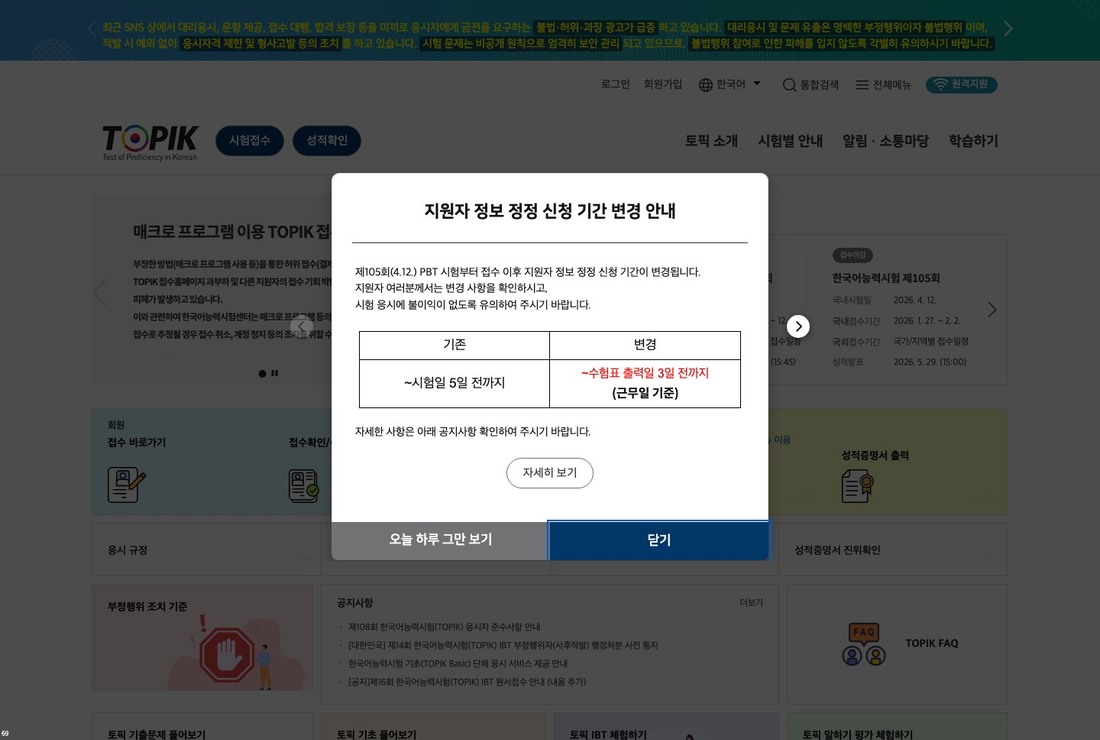
TOPIK Korean Language Proficiency Test
TOPIK is the representative test that certifies Korean language proficiency and is frequently used for university admissions, scholarships, and graduation requirements. Not all programs require TOPIK, but certain majors in Korean tracks or some scholarships may necessitate a specific level. Missing test schedules and score announcements can disrupt your admission application timeline, so it’s best to check this from the initial stages of your study plans. Since your Korean skills will directly affect your life after admission, rather than just aiming for a score, it's beneficial to prepare expressions needed for class presentations, administrative consultations, and medical visits as well.
시행기관 대한민국 교육부 국립국제교육원
시험 목적 한국어 사용 능력을 측정해 유학·취업 등의 기준으로 활용
평가 영역 TOPIK I 듣기·읽기, TOPIK II 듣기·쓰기·읽기
활용 상황 한국 대학 입학·졸업, 장학금과 취업용 한국어 등급이 필요할 때
확인할 점 TOPIK I·II 구분과 지원기관의 급수 기준, 국내외 시행일·접수처를 확인한다.
공식 정보 https://www.topik.go.kr/
이미지 출처 https://www.topik.go.kr/
HiKorea: Checking Student Residence Status
Once you've been accepted to a university, the next step is preparing your residency qualifications and visa. Hi Korea provides information related to student visas, foreign registration, residency extension, and accommodation changes. The documents required, such as the standard admission letter, financial documents, passport, photos, and fees, may vary depending on personal circumstances and the country of application. Even after entering Korea, procedures for foreign registration and address management will continue, so it's advisable to organize the residency administrative schedule alongside the academic calendar from before your arrival.
Planning Living Costs and Housing in Korea as an International Student
When assessing the cost of studying in Korea, focusing only on tuition fees may be insufficient. Actual living expenses can vary greatly depending on the city (Seoul versus regional areas), type of accommodation (dormitory versus studio), and the proportion of meals eaten at school cafeterias versus outside. You need to factor in the deposit required for monthly rent, mobile phone contracts, transportation costs, health insurance, textbook expenses, and even winter clothing purchases. It’s good to reserve at least three months' worth of estimated living expenses in advance and check the cash flow needed right after arrival. Since there can be delays in scholarship disbursements, it’s safer to budget more conservatively for the first semester.
Preparing for studying abroad doesn't stop at getting admitted into a school. It’s a lengthy process that continues with obtaining the standard admission letter, visa, paying tuition, securing dormitory or housing contracts, health insurance, phone services, and checking part-time job eligibility. By using the official admission guidelines of your target universities as a basis for verifying detailed requirements and leveraging government-operated services like Study in Korea, you can enhance the reliability of your information.
At a glance
6 items
#Checklist#Scholarship#Lifestyle Information#Foreigners#Life in Korea#Foreign Exchange Students#Studying in Korea#Study in Korea
As part of the Coupang Partners program, this post may earn a commission from qualifying purchases.
Comments 0
Log in to leave a comment.
Be the first to comment.
How about these lists?


You might also like


🎲
Not ready to stop here?
Wondering what to read next is the biggest waste of time.
Let the dice decide — you won't know what pops up until you roll.
If you don't press it… won't you wonder forever? 👀
