Collection
Nobel Prize
2026.10.07
The 2026 Nobel Prize in Chemistry That Amplified One Direction of a Molecule
The nonlinear effects and asymmetric autocatalysis revealed by Henri B. Kagan and Kenso Soai
The 2026 Nobel Prize in Chemistry recognized the discovery of nonlinear effects and autocatalysis in asymmetric organic synthesis. Even with the same atomic composition, molecules can take forms that do not overlap with each other, like two hands reflected in a mirror, and selectively producing one of those forms is important in pharmaceuticals and fine chemistry. Understanding how a small asymmetric difference grows during a reaction makes it possible to deal more precisely with the origin and amplification of selectivity.
The joint laureates are Henri B. Kagan and Kenso Soai, each receiving half of the prize amount. Kagan is connected with research on understanding the nonlinear relationships observed in asymmetric catalysis, while Soai is known for the asymmetric autocatalytic reaction in which the product promotes its own formation and amplifies one handedness. This list does not blur the two bodies of research into the same words; instead, it compares how different questions and experimental contributions meet within the official citation.
The joint laureates are Henri B. Kagan and Kenso Soai, each receiving half of the prize amount. Kagan is connected with research on understanding the nonlinear relationships observed in asymmetric catalysis, while Soai is known for the asymmetric autocatalytic reaction in which the product promotes its own formation and amplifies one handedness. This list does not blur the two bodies of research into the same words; instead, it compares how different questions and experimental contributions meet within the official citation.
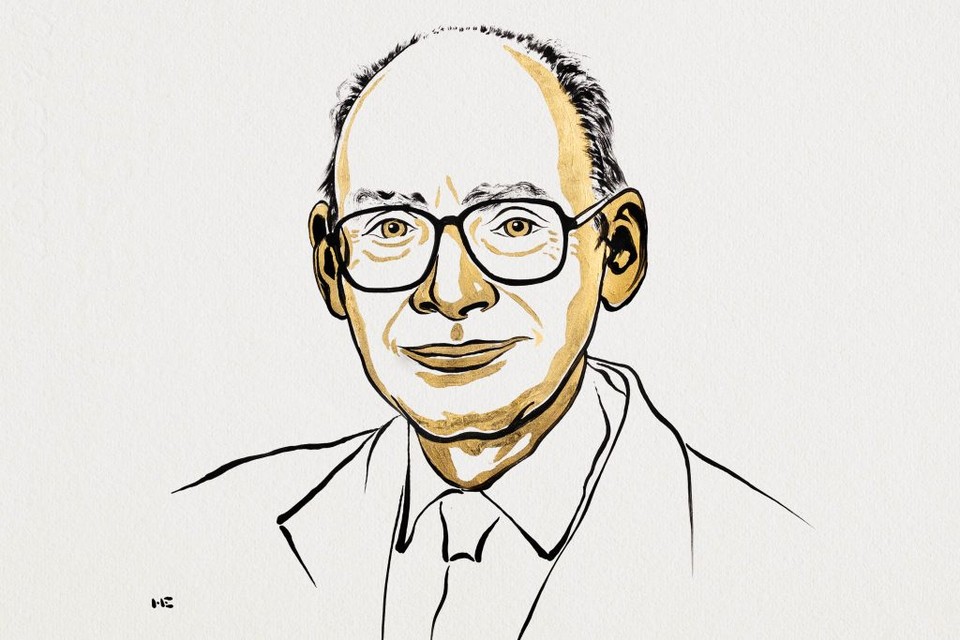
Henri B. Kagan
Henri B. Kagan was listed in the official announcement as a joint laureate affiliated with Université Paris-Sud and received half of the prize amount. In asymmetric catalytic reactions, the enantiomeric composition of the catalyst and the enantioselectivity of the product are not always proportional. The nonlinear effects connected with Kagan's research show that this relationship can be amplified or weakened far more than expected.
This discovery served as a reminder that, when interpreting reactions that selectively produce molecules of the desired direction, the outcome should not be simply predicted from catalyst purity alone. The official 2026 citation groups Kagan's contribution together with Soai's autocatalysis research under the problem of amplification in asymmetric organic synthesis. The two did not repeat the same experiment; they uncovered phenomena that complement each other.
This discovery served as a reminder that, when interpreting reactions that selectively produce molecules of the desired direction, the outcome should not be simply predicted from catalyst purity alone. The official 2026 citation groups Kagan's contribution together with Soai's autocatalysis research under the problem of amplification in asymmetric organic synthesis. The two did not repeat the same experiment; they uncovered phenomena that complement each other.
공식 소속 Université Paris-Sud
수상 지분 1/2
발표일 2026-10-07

Kenso Soai
Kenso Soai was announced in the official Nobel Prize materials as affiliated with Tokyo University of Science and received half of the prize amount. In the asymmetric autocatalytic reaction associated with his name, the product takes part in the next round of formation like a catalyst, producing more molecules of the same handedness and greatly amplifying the small initial imbalance.
This reaction is important in that it clearly demonstrates autocatalysis and chiral amplification within a single experimental system. It offers experimental clues for thinking about why biological molecules came to prefer one handedness, but it does not on its own prove the origin in the natural world. The official citation likewise takes the discovery of autocatalysis in asymmetric organic synthesis as the precise scope of evaluation.
This reaction is important in that it clearly demonstrates autocatalysis and chiral amplification within a single experimental system. It offers experimental clues for thinking about why biological molecules came to prefer one handedness, but it does not on its own prove the origin in the natural world. The official citation likewise takes the discovery of autocatalysis in asymmetric organic synthesis as the precise scope of evaluation.
공식 소속 Tokyo University of Science
수상 지분 1/2
발표일 2026-10-07
The research of Kagan and Soai shows, in different ways, that a small molecular imbalance can lead to large selectivity. Nonlinear effects reveal that the enantiomeric purity of the catalyst and that of the product do not necessarily follow a simple straight-line relationship, while asymmetric autocatalysis shows that a product, once formed, can promote the next reaction and amplify its own directionality. The reason the two share the prize in equal halves can be read in the connection between their research topics.
These achievements should not be taken as a complete resolution of the origin of life's single handedness. Between a principle demonstrated in a specific reaction and the question of origins across the natural world as a whole, additional assumptions and research are needed. What is clear, however, is that they made it possible to design asymmetric synthesis and to verify experimentally how minute initial differences become magnified. Comparing the two items on the basis of the award wording, affiliations, and shares in the official materials allows you to understand the scope of the 2026 chemistry prize without exaggeration.
These achievements should not be taken as a complete resolution of the origin of life's single handedness. Between a principle demonstrated in a specific reaction and the question of origins across the natural world as a whole, additional assumptions and research are needed. What is clear, however, is that they made it possible to design asymmetric synthesis and to verify experimentally how minute initial differences become magnified. Comparing the two items on the basis of the award wording, affiliations, and shares in the official materials allows you to understand the scope of the 2026 chemistry prize without exaggeration.
At a glance
2 items
As part of the Coupang Partners program, this post may earn a commission from qualifying purchases.
Comments 0
Log in to leave a comment.
Be the first to comment.
How about these lists?


You might also like




🎲
Not ready to stop here?
Wondering what to read next is the biggest waste of time.
Let the dice decide — you won't know what pops up until you roll.
If you don't press it… won't you wonder forever? 👀