
Collection
Fishing
2026.11.17
5 Fishing Knots to Learn by What You're Connecting
Knots for hooks and snaps, line-to-line connections, and open loops, sorted by purpose
Fishing knots are easier to understand if you start by sorting out what you're connecting, rather than using one familiar knot for everything. Tying to the eye of a hook or snap, joining a main line to a leader, and leaving an open loop at a lure each call for a different knot structure and different things to check. Here are five knots, each with a distinct purpose.
We pair the Palomar, improved clinch, uni, double uni and loop knots with SUNLINE's official instructional diagrams. This list is not a ranking of knot strength. It's meant to help you check whether a knot suits your line material, diameter and eye size, and to follow the actual tying steps alongside the full diagrams and the manufacturer's guidance.
We pair the Palomar, improved clinch, uni, double uni and loop knots with SUNLINE's official instructional diagrams. This list is not a ranking of knot strength. It's meant to help you check whether a knot suits your line material, diameter and eye size, and to follow the actual tying steps alongside the full diagrams and the manufacturer's guidance.
Palomar Knot
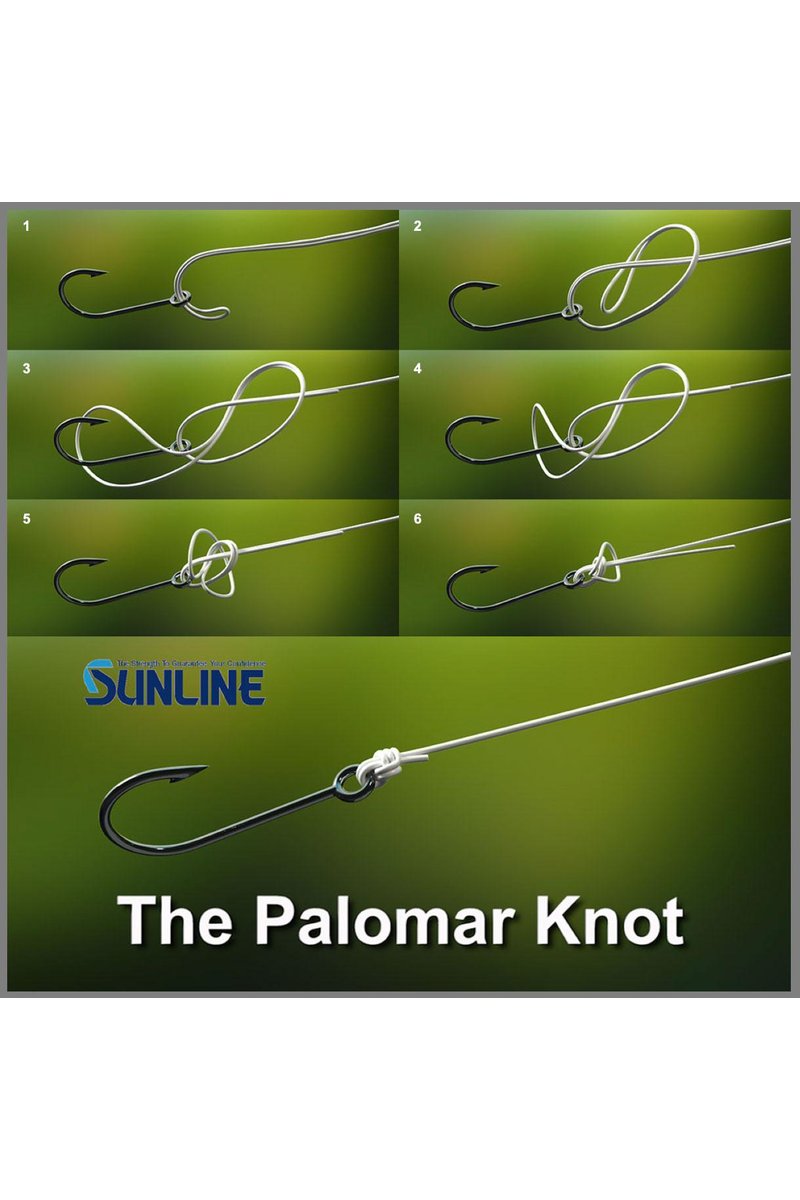
The Palomar knot connects to a hook, snap or similar by passing a doubled line through the eye and then tying it. With a small eye, even getting the doubled line through can be tricky, so check the line diameter and eye size first. SUNLINE's official diagram shows the tying process and the finished shape step by step.
Cinch it down while checking that the two strands don't cross unnecessarily inside the eye or get pulled on only one side. The space you have to tie in also varies with the size and shape of the lure. Rather than expecting the same result on every line just because the name is familiar, compare it with the recommended connection for the line you're using.
Cinch it down while checking that the two strands don't cross unnecessarily inside the eye or get pulled on only one side. The space you have to tie in also varies with the size and shape of the lure. Rather than expecting the same result on every line just because the name is familiar, compare it with the recommended connection for the line you're using.
연결 목적 바늘·스냅·루어 고리
확인할 점 두 겹 줄이 고리를 통과하는지 확인
공식 도해명 Palomar Knot
도해 안내 SUNLINE 공식 원문 도해·영상으로 단계 확인
공식 안내 https://sunlineamerica.com/pages/knots
Improved Clinch Knot
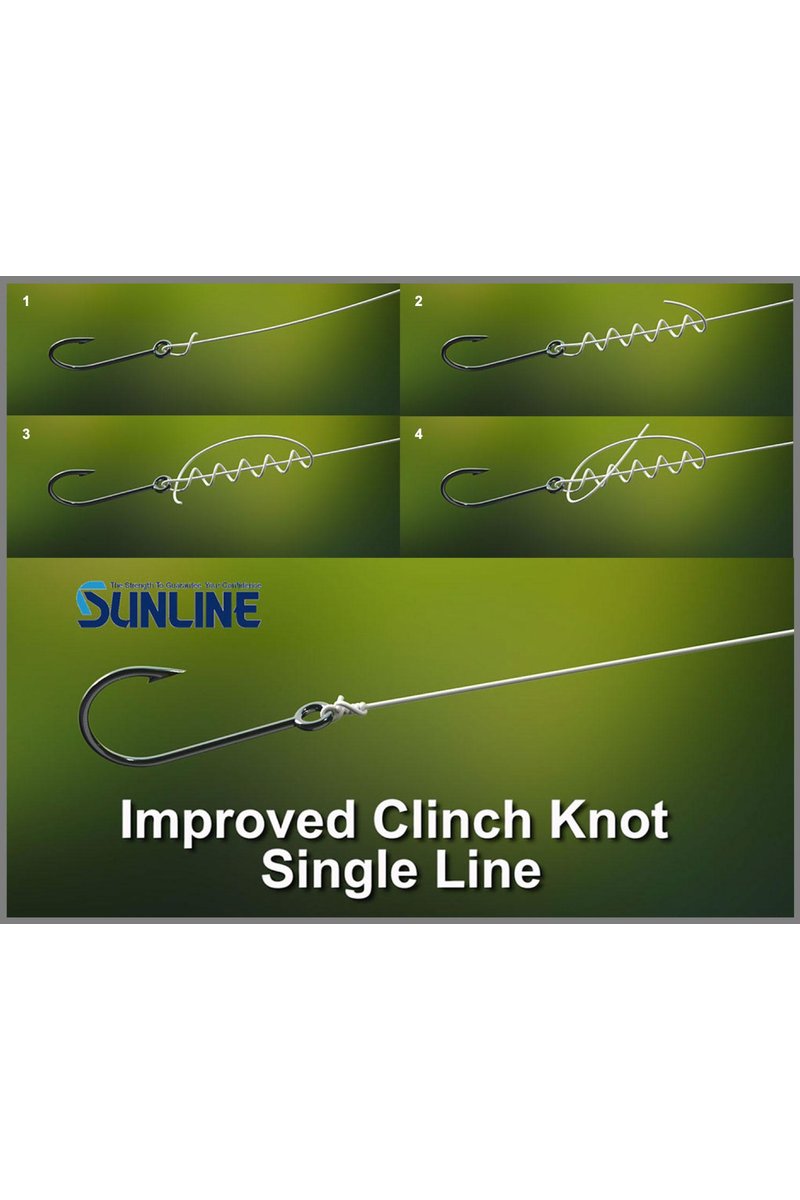
The improved clinch knot is a connection where you wrap the tag end, then pass it through the small loop and back through the returning loop. It's worth considering when tying to the eye of a hook or snap, and it differs from the regular clinch knot in that final pass. The English name on the official diagram is Improved Clinch Knot Single Line.
Compare the shape to make sure the wraps haven't overlapped and you haven't skipped the final pass. Check the number of wraps needed and how to finish the tag end against your line and the manufacturer's guidance. Don't assume from the name alone that this knot works the same way and performs the same on braid, nylon and fluorocarbon.
Compare the shape to make sure the wraps haven't overlapped and you haven't skipped the final pass. Check the number of wraps needed and how to finish the tag end against your line and the manufacturer's guidance. Don't assume from the name alone that this knot works the same way and performs the same on braid, nylon and fluorocarbon.
연결 목적 바늘·스냅 고리
확인할 점 마지막 통과 과정을 일반 클린치와 구분
공식 도해명 Improved Clinch Knot Single Line
도해 안내 SUNLINE 공식 원문 도해·영상으로 단계 확인
공식 안내 https://sunlineamerica.com/pages/knots
Uni Knot
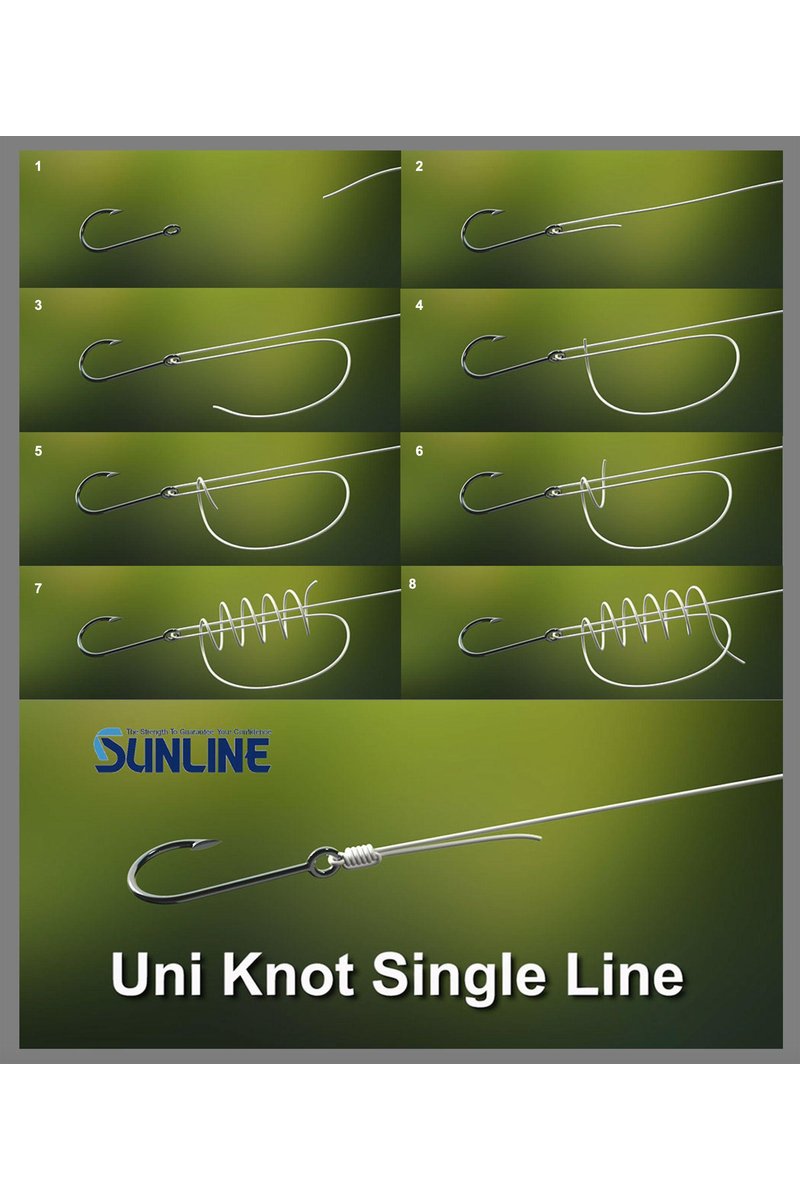
The uni knot is a connection where you wrap the tag end inside a loop formed alongside the standing line and cinch it down. You can refer to the official instructional diagram when tying to a hook, snap or lure eye. Even under the same uni name, the single-line method and the diagram using doubled line need to be kept apart.
This entry is based on SUNLINE's Uni Knot Single Line. While cinching, check that the wraps don't bunch to one side and the line doesn't twist. Compare the finished shape with the photo, and read the guidance on your line's material and diameter to decide how to apply it to your actual rig.
This entry is based on SUNLINE's Uni Knot Single Line. While cinching, check that the wraps don't bunch to one side and the line doesn't twist. Compare the finished shape with the photo, and read the guidance on your line's material and diameter to decide how to apply it to your actual rig.
연결 목적 바늘·스냅·루어 고리
확인할 점 줄이 겹치거나 꼬이지 않도록 정렬
공식 도해명 Uni Knot Single Line
도해 안내 SUNLINE 공식 원문 도해·영상으로 단계 확인
공식 안내 https://sunlineamerica.com/pages/knots
Double Uni Knot
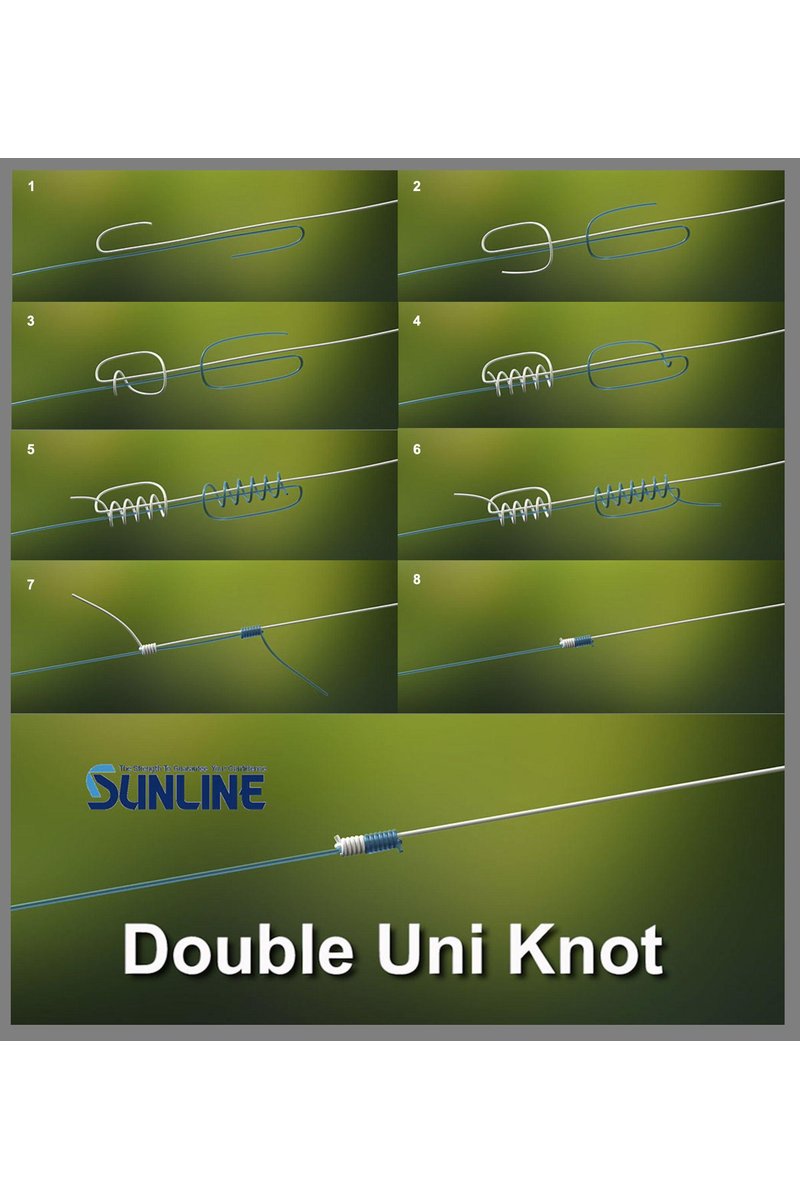
The double uni knot joins two lines by overlapping them side by side, forming a uni in each line, and then pulling them together. It's a useful reference when looking into line-to-line connections such as main line to leader. First, note that its purpose differs from the regular uni, which ties a single line to an eye.
Check that the knot in each line is properly cinched, then look at how they sit against each other. The right method can vary with differences in the two lines' material and diameter, so don't expect the same result for every combination. Follow the full process in SUNLINE's official diagram and compare the alignment of both knots.
Check that the knot in each line is properly cinched, then look at how they sit against each other. The right method can vary with differences in the two lines' material and diameter, so don't expect the same result for every combination. Follow the full process in SUNLINE's official diagram and compare the alignment of both knots.
연결 목적 원줄과 리더 등 두 줄 연결
확인할 점 각 줄에 만든 매듭의 정렬과 연결 상태 확인
공식 도해명 Double Uni Knot
도해 안내 SUNLINE 공식 원문 도해·영상으로 단계 확인
공식 안내 https://sunlineamerica.com/pages/knots
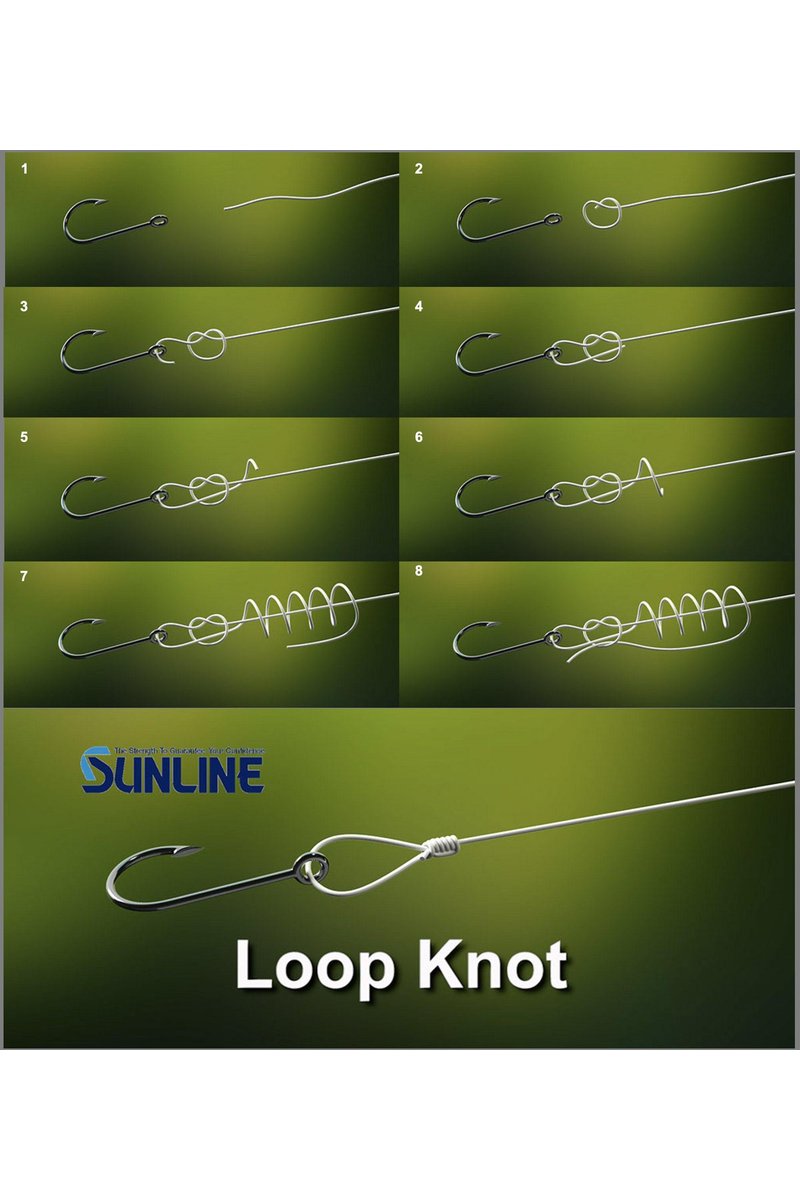
Loop Knot
The loop knot leaves a small open loop around the connection point, and it's a useful reference when looking into how to tie line to a lure's eye. Its finished shape differs from connections where the knot is pushed snug against the eye, so check the size of the loop you leave and the direction of the line in the diagram.
SUNLINE presents the process under the name Loop Knot. There are many methods in the loop family, so rather than mixing in steps from other sources, follow one diagram all the way through. Look at the tag end and the loop, and separately check whether the connection suits the line and lure you're using.
SUNLINE presents the process under the name Loop Knot. There are many methods in the loop family, so rather than mixing in steps from other sources, follow one diagram all the way through. Look at the tag end and the loop, and separately check whether the connection suits the line and lure you're using.
연결 목적 루어 고리에 여유 고리 만들기
확인할 점 고리 크기와 끝줄 방향을 공식 도해와 대조
공식 도해명 Loop Knot
도해 안내 SUNLINE 공식 원문 도해·영상으로 단계 확인
공식 안내 https://sunlineamerica.com/pages/knots
When you first practice, check how the loop and line run in a setting where hooks are easy to handle. Even the same knot can end up looking different if the line overlaps or isn't cinched down properly. Pick the method that fits what you're connecting, then compare your knot against each step of the official diagram.
Don't apply the same number of wraps and tag-end finish to every line; look at the guidance for the line you're using. Once it's tied, rather than yanking on it hard, check the knot's alignment and connection, and retie any damaged section. These entries are for fishing rigs and shouldn't be repurposed as load-bearing knots for other uses.
Don't apply the same number of wraps and tag-end finish to every line; look at the guidance for the line you're using. Once it's tied, rather than yanking on it hard, check the knot's alignment and connection, and retie any damaged section. These entries are for fishing rigs and shouldn't be repurposed as load-bearing knots for other uses.
At a glance
5 items
As part of the Coupang Partners program, this post may earn a commission from qualifying purchases.
Comments 0
Log in to leave a comment.
Be the first to comment.
How about these lists?


You might also like


🎲
Not ready to stop here?
Wondering what to read next is the biggest waste of time.
Let the dice decide — you won't know what pops up until you roll.
If you don't press it… won't you wonder forever? 👀
